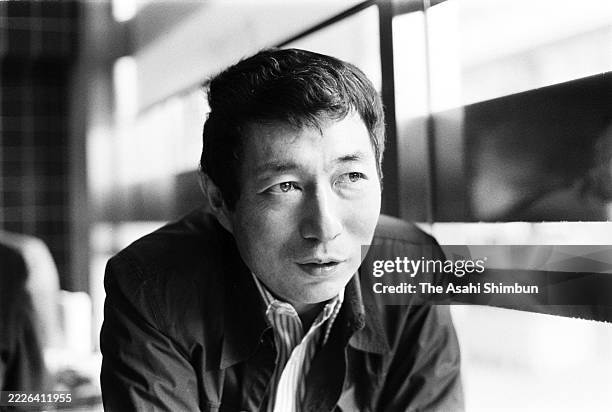
Shūji Terayama
 Japan
Japan생일
December 10, 1935
별자리
Sagittarius
출생지
Hirosaki, Aomori Prefecture, Japan
나이
47세에 사망
키
5 ft 7 in (170 cm)
소개
시즈 테라야마는 일본의 전위 시인이자 극작가, 영화감독으로, 그의 작품은 쉬운 분류를 거부했다. 1983년 사망하기 전까지 불과 25년의 경력 동안 그는 수백 편의 시, 수십 편의 희곡, 10편의 장편 영화, 그리고 수많은 에세이와 라디오 드라마를 남겼다. 많은 비평가들은 그를 전후 일본에서 등장한 가장 도발적인 창조적 힘 중 하나로 평가하며, 그의 영향력은 1970년대 이후의 영화감독, 연출가, 시인들에게까지 이어진다. 오늘날 그의 재산은 약 300만 달러로 평가되며, 사후 영화 복원, 책 번역, 그리고 크라이테리언 컬렉션 박스 세트가 그의 작품을 새로운 세대에게 전하고 있다.
초기 생애 및 배경
테라야마는 경찰관인 하치로 테라야마와 하츠 테라야마 사이에서 히로사키에서 태어났다. 그가 아홉 살 때, 아버지는 제2차 세계대전에서 사망했다. 재정적으로 어려움을 겪던 어머니는 가정부로 일하며 살았고, 어린 시즈는 아오모리현 미사와에 있는 친척 집으로 보내졌다. 이러한 이주와 조기의 상실은 그의 경력 전반에 걸쳐 뿌리 없음과 기억이라는 주제를 불태웠다.
그는 미사와 초등학교와 중학교를 다녔으며, 그곳에서 일본 고전과 서양 문학을 열심히 읽었다. 아오모리현립 미사와 고등학교에서 하이쿠와 단카를 쓰기 시작하여 전국 대회에 출품했다. 열일곱 살에 잡지 단카 연구에서 단카 시 상을 수상하며 일찍이 재능을 인정받았다. 1954년 도쿄로 이주하여 와세다 대학 교육학부에 잠시 다녔지만, 학계가 너무 제한적이라고 느껴 1년 만에 중퇴했다. 도시의 전위 문학계에 몰두하며 시인 우에다 타다히코와 오오카 마코토와 친구가 되었다. 그의 첫 출판 시집 맹인 찬가는 1957년에 나와 실험 시의 떠오르는 목소리로 자리매김했다.
경력 성장
테라야마의 돌파구는 1967년 도쿄에서 텐조 사지키 극단을 창단하면서 찾아왔으며, 이 극단은 곧 일본 언더그라운드 공연의 중심지가 되었다. 극단은 제4의 벽을 허물고 현실과 허구를 흐리는 도발적이고 관객 몰입형 작품을 선보였다. 1971년, 그는 돌파구 영화 책을 버리고 거리로 나가라를 발표했는데, 이 혼란스럽고 자전적인 기억, 정치, 반항의 콜라주는 칸 영화제 비평가상을 수상했다. 그의 가장 호평받은 영화인 파스토랄: 시골에서 죽다는 1974년에 이어 로카르노 영화제에서 심사위원 특별상을 수상했다. 이후 10년 동안 복서(1975)와 그의 마지막 영화인 방주에 작별 인사(1979)를 포함한 8편의 장편을 더 발표했다. 또한 1981년 16권으로 구성된 시즈 테라야마 전집을 출판하여 문학적 유산을 공고히 했다. 그의 경력은 1983년 간경변으로 인한 사망으로 단축되었지만, 그의 작품은 회고전과 복원을 통해 계속해서 재발견되고 있다.
경력 연표
대중적 이미지 및 스타일
테라야마의 공적 이미지는 끊임없는 도발자였다. 그의 작품은 초현실적이고 꿈같은 이미지, 비선형적 서사, 그리고 현실과 허구의 끊임없는 혼동이 특징이다. 그의 영화는 종종 황량한 풍경, 버려진 건물, 기억의 순환에 갇힌 인물들을 보여준다. 그의 연극은 대립적이었으며, 제4의 벽을 허물고 관객을 직접 참여시켰다. 비평가들은 그를 '일본의 고다르' 또는 '일본의 펠리니'라고 부르기도 하지만, 그의 작품은 더 무정부적이고 정치적으로 덜 독단적이다. 그는 전위 예술계에서 존경받지만, 일본 외의 주류 관객에게는 여전히 잘 알려지지 않았다. 팬들은 때때로 스스로를 '테라야마주의자' 또는 '사지키파'라고 부르며, 테라야마 데이로 알려진 그의 기일에 매년 상영회를 조직한다. 와세다 대학의 아카이브가 관리하는 공식 소셜 미디어 계정은 학술적이고 기록적인 목소리를 유지하며, 희귀 사진과 영화 클립을 게시한다.
명성과 팬덤
Shūji Terayama commands a focused, global attention that resonates deeply within avant-garde circles, film archives, and academic institutions rather than the mainstream pop consciousness. His work remains a touchstone for those exploring the boundaries of surrealism and underground theater, though his reach is defined by enduring influence rather than mass-market saturation. iFANN has evaluated this figure's standing in the cultural landscape, and the Global Fame Engine currently determines that Shūji Terayama does not hold a placement in the published rankings, including the Global Top 1,000 or any Top-100 scope list. This absence from the ranked lists reflects his status as a niche historical icon whose legacy is preserved through specialized study rather than contemporary viral metrics. The appreciation for his life and art is sustained by a fragmented community of scholars, cinephiles, and artists who operate without a formalized fanbase structure. There is no documented fandom name associated with Terayama; instead, his supporters are scattered across university departments, film festival attendees, and the underground art scene. Unlike modern celebrities who cultivate organized clubs or digital armies, the Terayama community engages through scholarly analysis, preservation efforts, and curated retrospectives hosted by institutions like the Harvard Film Archive. While social media accounts exist to archive his work, they function as historical repositories rather than hubs for interactive fan campaigns or grassroots organizing. His relationship with audiences was historically confrontational and non-reciprocal, designed to disrupt passive consumption rather than foster a traditional celebrity following.
흥미로운 사실과 전설
Terayama was a compulsive gambler who once wagered his entire advance for a poetry collection on a horse race; he lost the bet but later channeled the experience into a poem. A lifelong baseball enthusiast, he frequently wrote essays drawing parallels between the sport and theatrical performance. His Tenjō Sajiki troupe famously staged a play inside a moving train, turning passengers into an unwilling audience. Although he composed over 1,000 haiku during his lifetime, only 200 were published before his death, with the remainder discovered posthumously. His film Farewell to the Ark drew direct inspiration from a dream he experienced after reading Gabriel García Márquez's One Hundred Years of Solitude. Beyond these personal anecdotes, Terayama left behind legendary moments that define his mythos. The 1970 street performance titled Throw Away Your Books, Rally in the Streets stands as a defining event where hundreds of participants disrupted public space to challenge the established literary order. Another iconic work, The Boxer (1977), subverted the sports drama genre with its raw aesthetic and philosophical questioning of violence, featuring the now-famous line, Can you hate people? I can! His short film The War of Jan Ken Pon transformed the children's game Rock-Paper-Scissors into a grotesque allegory for war, spreading as a shocking visual incident through word-of-mouth in avant-garde circles long before the internet age.
주목할 만한 어록
“The past is not dead. It is not even past.”
“I make films because I cannot remember my childhood. The camera is my memory machine.”
“Theatre is not a place to escape reality. It is a place to confront it, naked and screaming.”
“Poetry is the only language that can speak of death without lying.”
가족 및 사생활
테라야마의 아버지 하치로 테라야마는 경찰관으로, 시즈가 아홉 살 때 제2차 세계대전에서 사망했다. 어머니 하츠는 가정부로 일하며 살았고, 그는 미사와에 있는 친척에 의해 길러졌다. 1961년, 그는 시인이자 소설가인 쿠죠 쿄코와 결혼했는데, 그녀는 고백시와 페미니즘 에세이로 유명한 저명한 문학 인물이었다. 두 사람 사이에는 1962년에 태어난 아들 토오루 테라야마가 있으며, 그는 사진작가이자 작가가 되어 현재 유산을 관리하고 있다. 결혼은 파격적이었고, 두 사람 모두 독립적인 예술가였으며, 쿄코는 나중에 테라야마의 바람과 알코올 중독 투쟁에 대해 솔직하게 썼다. 그녀는 그보다 오래 살아 2021년에 세상을 떠났다.
주요 관계
테라야마는 영화감독 오시마 나기사와 절친한 친구였으며, 예술의 정치적 역할에 대해 자주 논쟁했다. 그의 아내 쿠죠 쿄코는 중요한 시적 영향력이자 협력자였다. 그는 여러 영화에서 촬영감독 오타니 요시오와 협력했으며, 작곡가 유아사 조지가 그의 많은 작품에 음악을 붙였다. 그의 초기 멘토는 시인 오오카 마코토였다. 그의 아들 토오루 테라야마가 현재 그의 유산을 관리하고 있다.
연애 관계 및 이력
테라야마는 1961년 시인이자 소설가인 쿠조 쿄코와 결혼했습니다. 그들의 결혼은 파격적이었고, 둘 다 독립적인 예술가였으며, 아들 토오루를 두었습니다. 쿄코는 나중에 테라야마의 외도와 알코올 중독 투쟁에 대해 솔직하게 썼습니다. 1960년대 후반, 그는 천정사자키 극단 멤버인 레이코라는 여성과 유명한 불륜을 저질렀으며, 쿄코는 회고록에서 이를 인정했습니다. 1970년대 후반, 그는 자신의 극단에 있는 젊은 여배우와 불륜을 저질렀다는 소문이 있었으며, 여러 전기에서 언급됩니다. 테라야마는 1983년 사망할 때까지 쿄코와 결혼 생활을 유지했습니다.
- 기혼Kyōko Kujō1961 - 1983도쿄 문학계에서 만남; 아들 토오루를 둠; 그녀는 그의 외도와 알코올 중독에 대해 썼음.
- 교제했음Reiko1968 - 1972천정사자키 극단 멤버와의 불륜; 쿠조 쿄코가 인정함.
- 열애설Yoshiko1978 - 1982자신의 극단에 있는 젊은 여배우와의 불륜 소문; 전기에서 언급됨.
사망과 그 이후
사망
May 4, 1983 (향년 47세)
사망지
알 수 없음
사망 원인
알 수 없음
The release of Farewell to the Ark in 1979 marked his final cinematic statement, a work that would stand as a haunting reflection of his vision before the world lost its most provocative creative force. Shūji Terayama passed away on May 4, 1983, at the age of forty-seven, bringing an abrupt end to a career that had spanned just twenty-five years of intense production. While specific details regarding the location of his passing and the precise medical circumstances remain unrecorded in available archives, it is widely acknowledged within the community that he succumbed to cirrhosis, a condition that had long shadowed his life. His son, Tōru Terayama, assumed the role of managing the estate and overseeing the Shūji Terayama Archive at Waseda University, ensuring that the poet-filmmaker's extensive body of work remained accessible to future generations. Posthumous efforts have since focused on restoring his films and translating his poetry, keeping the flame of his avant-garde influence alive through retrospectives and new editions of his complete works.
재산 (유산 가치)
$3 Million
iFANN 편집팀 추정치
Because Terayama died in 1983, his net worth refers to the estate value and posthumous earnings. Per iFANN's editorial analysis, the estate is valued at approximately $3 million as of 2026. The estate is managed by his son, Tōru Terayama, and the Shūji Terayama Archive at Waseda University. Revenue sources include posthumous film releases and licensing fees from retrospectives worldwide, book royalties from poetry collections and essays (increasingly translated into English, French, and other languages), occasional revivals of Tenjō Sajiki plays, merchandise such as T-shirts and art books sold through museum shops, licensing fees for his name and image in documentaries and academic studies, and residuals from digital streaming on platforms like the Criterion Channel. The estate's wealth is almost entirely intellectual property-based, with no real estate or business ventures.
수상 (8)
테라야마의 수상 경력은 그의 전위적이고 반문화적인 지위를 반영합니다. 그는 1971년 칸 영화제에서 《책을 버리고 거리로 나가라》로 비평가상을 수상했고, 1974년 로카르노 영화제에서 《목가: 시골에서 죽다》로 특별심사위원상을 받았습니다. 1975년 일본 영화 감독 협회에서 《복서》로 최우수 감독상을, 1981년 《방주에 작별》로 마이니치 영화상 최우수 작품상을 수상했습니다. 1982년에는 문학과 연극에 대한 평생 공헌으로 일본 예술원상을 받았습니다.
1971 · 장편 영화
Throw Away Your Books, Rally in the Streets
1974 · 장편 영화
Pastoral: To Die in the Country
대표작
Throw Away Your Books, Rally in the Streets
1971 · Director, Writer
Pastoral: To Die in the Country
1974 · Director, Writer
Farewell to the Ark
1979 · Director, Writer
Boxer
1975 · Director, Writer
키워드
빠른 정보
- 직업
- poet, playwright, filmmaker
- 출생
- +1935-12-10
- 출생지
- Hirosaki, Aomori Prefecture, Japan
- 사망
- +1983-05-04
- 사망지
- Suginami, Tokyo, Japan
- 성별
- 남성
- 배우자
- Kyōko Kujō
- 별자리
- Sagittarius
개인 정보
- 본명
- Shūji Terayama
- 키
- 5 ft 7 in (170 cm)
- 배우자
- Kyōko Kujō
- 자녀
- Tōru Terayama
- 학력
- Waseda University (dropped out after 1 year)
필모그래피
10
전체
10
영화
0
TV
자주 묻는 질문
슈지 테라야마는 무엇으로 유명한가?
슈지 테라야마는 어떻게 죽었는가?
2026년 슈지 테라야마의 재산은 얼마인가?
슈지 테라야마는 오늘날에도 여전히 영향력이 있는가?
슈지 테라야마는 누구와 결혼했는가?
소셜 미디어
커뮤니티 참여
명의 팬이 이야기 중