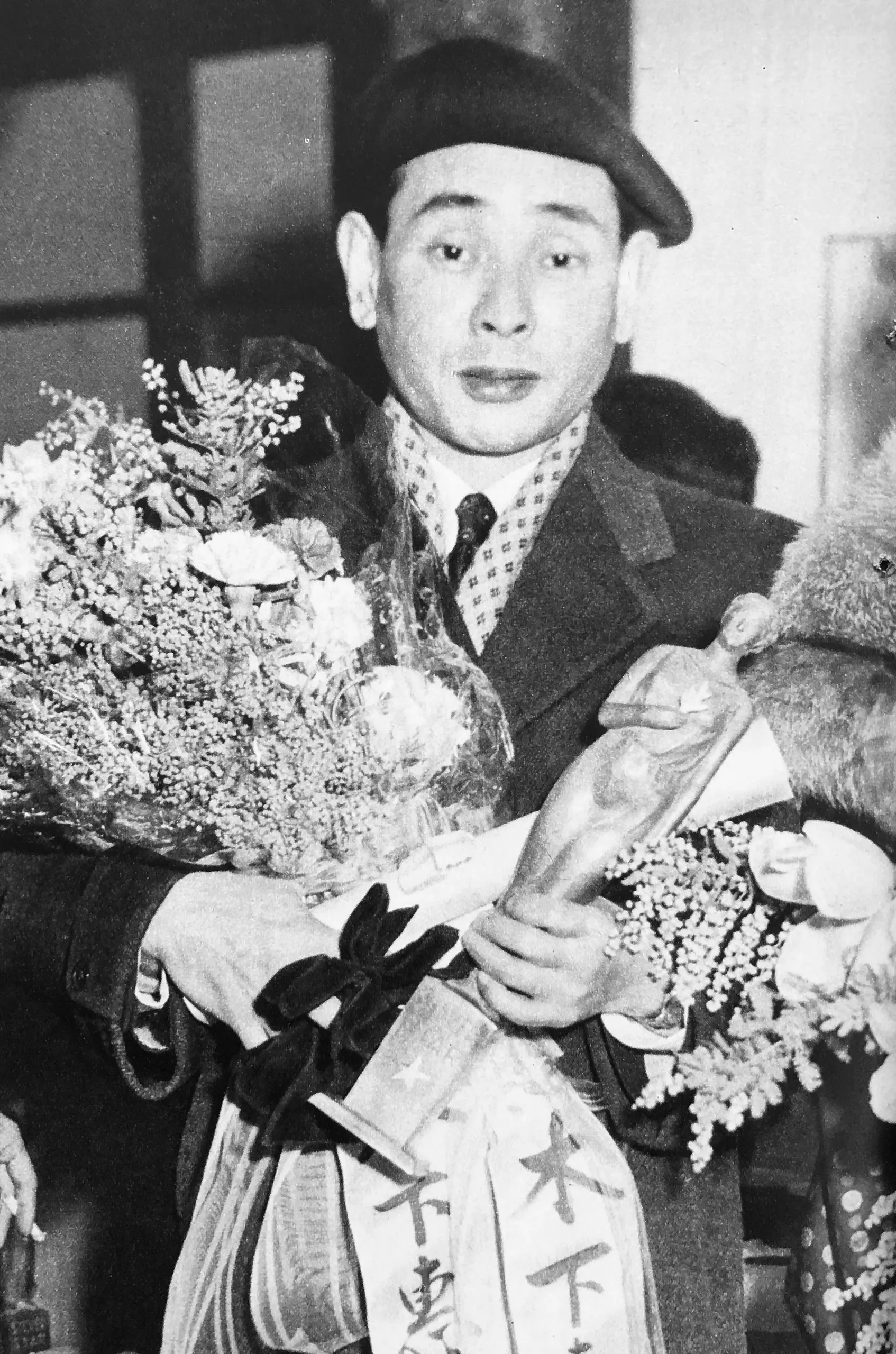
Keisuke Kinoshita
 Japan
Japanfilm director•screenwriter•film producer
생일
December 5, 1912
별자리
Sagittarius
출생지
Hamamatsu, Shizuoka Prefecture, Japan
나이
86세에 사망
키
5 ft 6 in (168 cm)
소개
기노시타 케이스케는 1940년대부터 1960년대까지 일본 국내 관객에게 깊은 공감을 불러일으킨 일본 영화 감독이자 각본가였습니다. 구로사와 아키라나 오즈 야스지로만큼 국제적으로 알려지지는 않았지만, 기노시타는 일본에서 가정적인 이름으로, 인본주의적 스토리텔링과 기술적 대담함으로 유명했습니다. 그의 영화는 감상주의와 시각적 실험을 자주 혼합했는데, 일본 최초의 컬러 영화 카르멘 고향에 돌아오다(1951)부터 가부키에서 영감을 받은 나라야마 부시코(1958)까지 다양했습니다. 그의 가장 사랑받는 작품인 스물네 개의 눈동자(1954)는 일본 영화의 초석으로 남아 있으며, 골든 글로브 최우수 외국어 영화상을 수상했습니다. 40년이 넘는 경력 동안 기노시타는 48편의 영화를 감독했으며, 그중 많은 작품이 회고전에서 상영되고 새로운 세대를 위해 복원되고 있습니다. 그는 1998년 86세의 나이로 세상을 떠났으며, 평범한 일본인의 감정적 삶을 우아함과 진실함으로 포착한 감독으로서의 유산을 남겼습니다.
초기 생애 및 배경
기노시타는 직물 공장과 피아노 공장으로 유명한 하마마쓰에서 자랐으며, 그의 아버지는 기모노 천 가게를 운영했습니다. 기노시타가 어렸을 때 아버지가 돌아가셔서 가정 형편이 어려워졌고, 어머니가 그와 형제자매를 홀로 키웠습니다. 어머니의 희생에 대한 이러한 경험은 이후 그의 영화에서 반복되는 주제가 되었습니다. 그는 하마마쓰 중학교에 다녔으며, 지역 극장에서 서양과 일본 영화를 보면서 영화에 대한 열정을 키웠습니다. 졸업 후 1933년 도쿄로 이주하여 일본의 주요 영화 스튜디오 중 하나인 쇼치쿠에 실험실 부서의 필름 프로세서로 합류했습니다. 생산 사다리의 가장 낮은 위치였지만, 기노시타는 카메라 어시스턴트, 그리고 조감독으로 승진했습니다. 그는 오즈 야스지로와 키무라 케이고 같은 기성 감독 밑에서 기술을 배웠습니다. 1943년, 10년간의 견습 끝에 쇼치쿠는 그를 감독으로 승진시켰고, 항구 마을을 배경으로 한 인간주의 드라마인 데뷔작 꽃의 항구를 연출했습니다. 이 영화는 적당한 성공을 거두었고, 일상 생활에 뿌리를 둔 스토리텔링으로 그의 명성을 확립했습니다.
경력 성장
기노시타의 돌파구는 1951년 실험적인 후지컬러 프로세스를 사용한 일본 최초의 장편 컬러 영화 카르멘 고향에 돌아오다에서 찾아왔습니다. 이 영화는 시골 소녀가 도쿄에서 스트리퍼가 되어 고향 마을로 돌아온다는 내용의 코미디 드라마로, 상업적, 비평적으로 모두 성공했습니다. 3년 후, 그는 1928년부터 전후 시기까지 한 선생님과 그녀의 12명의 학생을 따라가는 서사적인 눈물샘 자극 영화 스물네 개의 눈동자를 연출했습니다. 이 영화는 골든 글로브 최우수 외국어 영화상과 마이니치 영화상 최우수 영화상을 수상했으며, 그의 가장 유명한 작품으로 남아 있습니다. 1958년, 기노시타는 나라야마 부시코를 발표했는데, 이는 산에 버려지는 노파에 대한 민담을 각색한 양식화된 작품입니다. 이 영화는 가부키에서 영감을 받은 인공 세트, 페인트 배경, 연극적 조명을 사용했으며, 또 다른 골든 글로브 최우수 외국어 영화상을 수상했습니다. 1960년대 내내 그는 후에후키 강(1960)과 향의 향기(1964) 같은 영화로 왕성하게 감독 활동을 계속했습니다. 1967년에는 텔레비전으로 옮겨 여러 찬사를 받은 드라마를 연출했습니다. 그의 마지막 영화는 TV 영화 생명의 강(1986)이었습니다.
경력 연표
대중적 이미지 및 스타일
일본에서 기노시타는 국보로 존경받으며, 종종 국민 감독이라고 불리는데, 이는 그의 영화가 대중 관객에게 어필했기 때문입니다. 비평가들은 그의 스타일을 인본주의적이고 감상적이라고 설명하며, 모성애, 전쟁이 평범한 사람들에게 미치는 영향, 시간의 흐름이라는 반복되는 주제를 강조합니다. 그는 색상, 양식화된 세트, 가부키에서 영감을 받은 디자인을 포함한 대담한 시각적 실험으로 유명했습니다. 서양 비평가들은 때때로 그의 멜로드라마적 접근 방식 때문에 그를 더글러스 서크와 비교합니다. 팬들은 매년 3월 3일 일본의 히나마쓰리에 스물네 개의 눈동자를 상영하며, 그의 작품 회고전은 전 세계 영화제에서 정기적으로 관객을 끌어 모읍니다. 그의 소셜 미디어 존재는 팬 그룹과 쇼치쿠 스튜디오의 공식 계정에 의해 유지됩니다.
명성과 팬덤
Keisuke Kinoshita commands a legacy defined not by the fervor of modern idol worship, but by the enduring reverence of film scholars and cinephiles who study the golden age of Japanese cinema. Unlike contemporary stars with organized fan clubs bearing specific monikers, his audience consists of historians and general enthusiasts who engage with his work through institutional channels like The Criterion Collection and museum retrospectives rather than grassroots campaigns or social media rituals. His cultural footprint remains anchored in the global appreciation for post-war humanism and technical innovation, with commemorative tributes appearing sporadically on significant anniversaries of his birth. While no formal fandom name exists to unify these disparate groups, the collective memory of his films serves as a unifying thread for those dedicated to preserving cinematic history. This quiet, academic devotion stands in stark contrast to the chaotic adoration seen in pop culture, reflecting a relationship built on artistic merit rather than celebrity spectacle. Despite his profound impact on domestic audiences and international recognition from peers like Akira Kurosawa, iFANN's Global Fame Engine has evaluated this person, but they do not currently hold a placement in the published rankings (Global Top 1,000 or a Top-100 scope list). Consequently, no numerical ranking or score is assigned to his current global fame status within the system.
흥미로운 사실과 전설
Keisuke Kinoshita directed Japan's first color film, Carmen Comes Home (1951), utilizing Fujicolor technology that produced such vivid hues it reportedly caused eye strain for some viewers. His 1944 film The Army contained subtle anti-war messages that drew the ire of military censors during production. He served as a mentor to Masaki Kobayashi, who worked under him as an assistant director on The Morning of the Osone Family. Among his own body of work, Kinoshita held She Was Like a Wild Chrysanthemum (1955) as his personal favorite. He consistently turned down offers to direct in Hollywood, preferring to remain at Shochiku studio throughout his career. His final words, according to his wife, expressed a desire to make one more film before passing. A notable piece of industry lore involves Akira Kurosawa naming Kinoshita as his favorite Japanese director, a reflection of his standing among peers. His 1958 adaptation of The Ballad of Narayama sparked intense cultural discourse regarding ancient folklore and social customs, often cited for its kabuki-inspired design and controversial themes. These elements combine to form a legacy where the films themselves are the primary ritual for fans, rather than organized fan events.
주목할 만한 어록
“I wanted to make films that would make people cry, but also make them think.”
“The war took everything from us, but it could not take away our humanity.”
“I never wanted to go to Hollywood. My stories are Japanese stories.”
“A film should be like a poem: concise, beautiful, and full of feeling.”
“My mother was the strongest person I ever knew. I put her into every film.”
가족 및 사생활
기노시타의 아버지는 그가 어렸을 때 돌아가셨고, 어머니가 그와 형제자매를 홀로 키웠습니다. 그는 1956년 여배우 쿠가 요시코와 결혼했습니다. 당시 그녀는 25세, 그는 43세였습니다. 부부는 자녀가 없었습니다. 쿠가는 나라야마 부시코를 포함한 그의 여러 영화에 출연했습니다. 기노시타 사후, 쿠가는 그의 유산의 주요 관리인이 되어 복원과 영화제를 감독했습니다. 그녀는 인터뷰에서 그의 일에 대한 헌신과 도쿄에서의 조용한 가정 생활에 대해 이야기했습니다.
주요 관계
기노시타는 여배우 타카미네 히데코와 긴밀히 협력했으며, 그녀는 스물네 개의 눈동자와 그녀는 야생 국화 같았다를 포함한 그의 여러 영화에 출연했습니다. 그는 또한 작곡가 기노시타 추지(동명이인 아님)와 각본가 노다 코고와 협력했습니다. 멘토로서 그는 감독 마사키 고바야시에게 영향을 미쳤으며, 고바야시는 기노시타의 조감독으로 경력을 시작했습니다.
연애 관계 및 이력
키노시타는 1956년 여배우 쿠가 요시코와 결혼했습니다. 두 사람은 쿠가가 그의 영화 《나라야마 부시코》(1958)에 캐스팅되었을 때 만났지만, 영화 개봉 2년 전에 결혼했습니다. 쿠가는 25세, 키노시타는 43세였습니다. 부부는 자녀가 없었으며 키노시타가 1998년 사망할 때까지 결혼 생활을 유지했습니다. 쿠가는 나중에 그를 일을 최우선으로 하지만 깊이 애정 어린 헌신적인 남편이라고 묘사했습니다. 그의 사후, 쿠가는 그의 유산의 주요 관리인이 되었습니다. 신뢰할 수 있는 출처에 다른 로맨스 관계는 기록되지 않았습니다.
- 기혼Yoshiko Kuga1956 - 1998쿠가가 《나라야마 부시코》에 캐스팅되었을 때 만났으며, 키노시타가 사망할 때까지 결혼 생활을 유지했습니다.
사망과 그 이후
사망
December 30, 1998 (향년 86세)
사망지
알 수 없음
사망 원인
알 수 없음
The Cannes Film Festival honored the late director by selecting The Ballad of Narayama for its Cannes Classics program in 2012, a retrospective gesture acknowledging his contribution to cinema long after his passing. The Criterion Collection further sustained this appreciation with an Eclipse Series dedicated to Kinoshita and World War II in 2014, while a comprehensive critical volume titled The Cinema of Kinoshita Keisuke: Films of Joy and Sorrow appeared in August 2025. A biographical film named Dawn of a Filmmaker: The Keisuke Kinoshita Story, starring Ryo Kase and directed by Keiichi Hara, served as a major cultural commemoration during the early 2010s. These posthumous releases maintained the visibility of his fifty feature films, which spanned from 1943 to 1988, ensuring his legacy remained active within global archives.
Keisuke Kinoshita passed away on December 30, 1998, at the age of eighty-six. Available records do not specify the exact location where he died, nor do they provide an official statement regarding the cause of death or details concerning his final days. His widow, actress Yoshiko Kuga, managed the estate following his death, overseeing restorations and film festivals while preserving their quiet domestic history in Tokyo., institutions continued to recognize his work through curated screenings and publications. The Keisuke Kinoshita Memorial Museum in Hamamatsu City stands as a physical tribute to his life, though the specific arrangements of his funeral, including whether it was held there or how his remains were interred, remain unrecorded in the historical data.
재산 (유산 가치)
$5.5 Million
iFANN 편집팀 추정치
Per iFANN's editorial analysis, the estate of Keisuke Kinoshita is valued at $5.5 Million as of 2026. During his lifetime, Kinoshita earned a salary as a contract director at Shochiku, estimated at ¥1-2 million per film in the 1950s and 1960s. After his death, his widow Yoshiko Kuga managed the estate, which generates revenue from film restorations, DVD and Blu-ray sales by distributors such as the Criterion Collection, television broadcasts in Japan, and screening fees from film festival retrospectives. A major retrospective at the Museum of Modern Art in New York in 2023 and ongoing restorations by Shochiku and the National Film Archive of Japan have boosted licensing income. The estate does not include significant real estate or business ventures, as Kinoshita focused entirely on his film career.
수상 (18)
키노시타는 《스물네 개의 눈동자》(1955)와 《나라야마 부시코》(1959)로 골든 글로브 최우수 외국어 영화상을 두 번 수상했습니다. 또한 《오소네 가족의 아침》, 《스물네 개의 눈동자》, 《그녀는 들국화 같았다》, 《나라야마 부시코》로 최우수 작품상과 최우수 감독상을 포함한 여러 마이니치 영화상을 수상했습니다. 《스물네 개의 눈동자》와 《나라야마 부시코》로 블루리본상 최우수 작품상과 최우수 감독상을 수상했습니다.
1959 · 최우수 외국 영화상
The Ballad of Narayama
1955 · 최우수 외국 영화상
Twenty-Four Eyes
1958 · 최우수 영화상
The Ballad of Narayama
1958 · 최우수 감독상
The Ballad of Narayama
1955 · 최우수 영화상
She Was Like a Wild Chrysanthemum
1955 · 최우수 감독상
She Was Like a Wild Chrysanthemum
1954 · 최우수 영화상
Twenty-Four Eyes
1954 · 최우수 감독상
Twenty-Four Eyes
1951 · 최우수 감독상
Carmen Comes Home
1947 · 최우수 영화상
The Morning of the Osone Family
대표작
Twenty-Four Eyes
1954 · 감독
The Ballad of Narayama
1958 · 감독
Carmen Comes Home
1951 · 감독
She Was Like a Wild Chrysanthemum
1955 · 감독
A Japanese Tragedy
1953 · 감독
키워드
빠른 정보
- 직업
- film director, screenwriter, film producer
- 출생
- December 5, 1912
- 출생지
- Hamamatsu, Shizuoka, Japan
- 사망
- December 30, 1998
- 사망지
- Tokyo, Japan
- 성별
- 남성
- 별자리
- Sagittarius
- 키
- 5 ft 6 in (168 cm)
- 배우자
- Yoshiko Kuga (m. 1956)
- Children
- None
- Education
- Hamamatsu Middle School
개인 정보
- 본명
- Keisuke Kinoshita
- 키
- 5 ft 6 in (168 cm)
- 배우자
- Yoshiko Kuga
- 학력
- Hamamatsu Middle School
필모그래피
48
전체
43
영화
5
TV
자주 묻는 질문
키노시타 케이스케는 몇 살에 사망했나요?
키노시타 케이스케는 무엇으로 가장 잘 알려져 있나요?
키노시타 케이스케는 상을 받았나요?
키노시타 케이스케는 결혼했나요?
키노시타 케이스케는 몇 편의 영화를 감독했나요?
커뮤니티 참여
명의 팬이 이야기 중