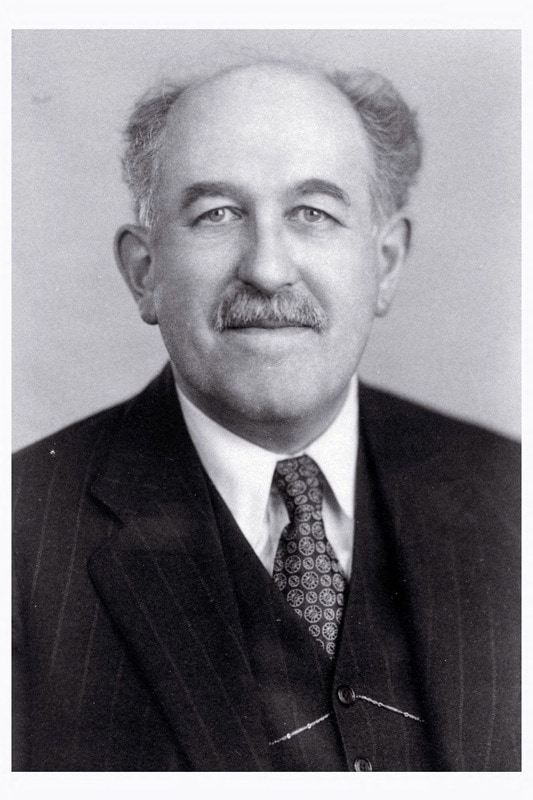
Otto Stern
 Germany
physicist•chemist•university teacher
생일
February 17, 1888
별자리
Aquarius
출생지
Żory, Upper Silesia, German Empire (present-day Poland)
나이
81세에 사망
키
5 ft 7 in (170 cm)
소개
오토 슈테른은 독일계 미국인 실험 물리학자로, 그의 연구는 원자 및 분자 물리학을 재편성했습니다. 그는 분자선 방법을 개발하여 과학자들이 원자와 분자의 특성을 전례 없는 정밀도로 연구할 수 있게 했습니다. 이 혁신은 그의 가장 유명한 업적인 1922년의 슈테른-게를라흐 실험으로 이어졌으며, 이 실험은 각운동량의 양자화를 입증하고 스핀의 존재를 확인했습니다. 이와 관련된 발견으로 그는 1943년 노벨 물리학상을 수상했으며, 특히 분자선 방법에 대한 공헌과 양성자의 자기 모멘트 발견이 인정받았습니다. 놀랍게도 1925년부터 1945년 사이에 슈테른은 82회의 노벨상 후보에 올라, 노벨상 역사상 두 번째로 많은 후보 지명을 받은 인물이 되었습니다. 오늘날 그의 방법은 자기 공명 영상에서 원자 시계에 이르는 기술의 기초가 되고 있으며, 그의 이름은 독일 물리학회가 수여하는 슈테른-게를라흐 메달에 남아 있습니다.
초기 생애 및 배경
오토 슈테른은 상부 실레지아의 작은 마을인 조리에서 유대인 가정에서 태어났습니다. 그의 아버지 오스카 슈테른은 곡물 사업을 운영했습니다. 오토가 아직 어렸을 때, 가족은 브레슬라우로 이사했고, 그곳에서 그는 요하네스 김나지움에 다니며 수학과 과학에 조기 재능을 보였습니다. 그는 브레슬라우 대학교에 입학하여 처음에는 물리 화학을 공부했고, 1908년에 학사 학위를 받았습니다. 그는 대학원 과정을 계속하여 1912년에 오토 자쿠어의 지도 하에 농축 탄산 용액의 삼투압에 관한 논문으로 물리 화학 박사 학위를 받았습니다.
같은 해, 슈테른은 취리히 대학교에서 알베르트 아인슈타인과 함께 박사후 연구원으로 일했습니다. 두 사람은 긴밀히 협력하여 1913년에 영점 에너지에 관한 논문을 공동 집필했습니다. 1914년, 슈테른은 막스 보른을 따라 프랑크푸르트 대학교로 갔고, 그곳에서 나중에 분자선 방법이 될 것을 개발하기 시작했습니다. 제1차 세계 대전이 그의 연구를 중단시켰습니다. 그는 1914년부터 1918년까지 독일군에서 복무하며 전선 근처에서 기상 작업을 담당했습니다. 전쟁 후, 그는 프랑크푸르트로 돌아와 사강사가 되었고, 1921년에 로스토크 대학교의 이론 물리학 부교수로 임명되었습니다. 같은 해, 그는 발터 게를라흐와 함께 슈테른-게를라흐 실험을 구상했습니다. 1922년에 수행된 이 실험은 은 원자 빔을 불균일 자기장에 통과시켰습니다. 빔은 두 개의 뚜렷한 경로로 분리되어 공간 양자화와 전자 스핀에 대한 최초의 직접적인 증거를 제공했습니다.
경력 성장
슈테른-게를라흐 실험은 슈테른의 명성을 높였습니다. 1923년, 그는 함부르크 대학교의 물리 화학 정교수이자 물리 화학 연구소 소장으로 임명되었습니다. 이후 10년 동안 그는 분자선 방법을 개선하여 단일 원자를 감지할 수 있는 최초의 장치를 구축했습니다. 1931년, 슈테른과 그의 학생 이마누엘 에스터만은 처음으로 양성자의 자기 모멘트를 측정했습니다. 그들은 그것이 약 2.5 핵 마그네톤임을 발견했는데, 이 값은 스핀-½ 입자에 대해 0을 예측한 디랙 이론과 직접적으로 모순되었습니다. 이것은 혁명적인 발견으로, 쿼크가 제안되기 수십 년 전에 양성자가 내부 구조를 가지고 있음을 밝혀냈습니다.
나치 정권의 부상으로 유대인이었던 슈테른은 1933년에 강제로 사임해야 했습니다. 그는 몇 주 안에 독일을 떠나 처음에는 취리히, 그 다음에는 옥스포드, 마지막으로 미국으로 갔습니다. 그는 피츠버그의 카네기 공과대학에 연구 물리학 교수로 합류하여 분자선 연구를 계속하고 한 세대의 물리학자들을 가르쳤습니다. 1943년, 그는 노벨 물리학상을 수상했지만, 제2차 세계 대전으로 인해 시상식은 1945년으로 연기되었습니다. 그는 그해 은퇴하고 캘리포니아 버클리로 이사하여 1969년 사망할 때까지 조용히 살았습니다.
경력 연표
대중적 이미지 및 스타일
슈테른은 구겨진 양복, 항상 있는 시가, 그리고 실험실에서의 강렬하고 집중된 태도로 유명했습니다. 그는 두꺼운 독일 억양을 가지고 있었고 고전적인 의미의 교수형으로 묘사되었습니다. 물리학 역사에서 그는 조용한 천재, 자신의 결과가 스스로 말하게 하는 세심한 실험가로 그려지며, 종종 그의 시대의 더 화려한 이론 물리학자들과 대조됩니다. 물리학 애호가들, 특히 실험 물리학자들 사이에서 슈테른은 존경받습니다. 슈테른-게를라흐 실험은 전 세계의 양자 역학 과정에서 통과 의례로 남아 있으며, 연례 슈테른-게를라흐 강연과 컨퍼런스가 그의 유산을 이어가고 있습니다. 역사적 기록은 그를 진지하고 헌신적이며 약간 괴짜인, 자신의 실험이 밝혀낸 진실에만 관심이 있는 사람으로 제시합니다.
명성과 팬덤
Otto Stern holds no placement in the iFANN Global Top 1,000 or any Top-100 scope list. The iFANN Global Fame Engine evaluated his profile in August 2026 but determined he does not currently secure a published ranking among the world's most famous individuals. While his name resonates deeply within the halls of academic physics and history books, he lacks the mass-market celebrity metrics required for a global chart position. There is no formal fandom name documented for Otto Stern. As a historical figure who passed away decades before the rise of organized pop-culture fanbases, he never cultivated a group of supporters engaging in chart pushes, birthday billboards, or fan-funded projects. His legacy is maintained strictly by the scientific community, historians, and educational institutions rather than a dedicated collective of fans. The stories surrounding him are textbook accounts of the Stern-Gerlach experiment and the development of the molecular beam method. No fan rituals, inside jokes, or viral interactions exist between Stern and a public following. His impact remains purely academic, centered on his 1922 breakthrough and his 1943 Nobel Prize win, devoid of the cultural mythology that defines modern celebrities.
흥미로운 사실과 전설
Between 1925 and 1945, Stern accumulated 82 Nobel Prize nominations, a record second only to Arnold Sommerfeld. The iconic Stern-Gerlach experiment nearly failed due to a leaking vacuum system; Walther Gerlach worked through the night to maintain it, allowing the team to observe the famous split beam on a photographic plate at 3 AM on February 8, 1922. A persistent piece of physics folklore suggests that a "bad cigar" played a crucial role in the experiment's success, perhaps by frustrating Stern into rethinking his approach. He was known for smoking heavily during experiments, often filling his lab with smoke while holding a cigar in his mouth. Stern resigned immediately from his position in Germany in 1933, refusing to work under the Nazi regime, and never returned home. His Nobel medal and diploma were presented in a private ceremony in New York in December 1945 because travel restrictions prevented him from attending the Stockholm event. Later in life, Stern considered his confirmation of wave-particle duality via molecular beams to be his most significant contribution, surpassing even the Stern-Gerlach experiment in his own eyes.
주목할 만한 어록
“The experiment is the sole judge of scientific truth.”
“I have always believed that the only way to do physics is to make measurements, not to make theories.”
“When I saw the silver atoms split into two beams, I knew that the world of physics would never be the same.”
“I was not surprised by the result. I expected something unusual. Nature is always more ingenious than we are.”
“Einstein taught me that physics is about asking the right questions. Nature provides the answers.”
가족 및 사생활
슈테른은 결혼하지 않았고 자녀도 없었습니다. 그의 가장 가까운 가족 관계는 결혼하지 않은 여동생이었으며, 그녀와 함께 독일에서, 그리고 은퇴 후 버클리에서 여러 해 동안 살았습니다. 그의 아버지 오스카 슈테른은 조리의 곡물 상인이었습니다. 슈테른은 외로운 인물로 알려져 있었으며, 사교 모임보다 실험실을 선호했고, 그의 주요 동반자는 그의 연구였습니다.
주요 관계
슈테른은 취리히 대학교에서 알베르트 아인슈타인과 긴밀히 협력하여 영점 에너지에 관한 논문을 공동 집필했습니다. 그는 발터 게를라흐와 함께 획기적인 슈테른-게를라흐 실험을 공동 수행했습니다. 막스 보른은 프랑크푸르트에서 슈테른의 초기 경력을 발전시키는 데 도움을 준 주요 동료였습니다. 슈테른의 제자 이마누엘 에스터만은 양성자의 자기 모멘트를 공동 측정했습니다. 그의 방법은 이후 핵자기공명으로 노벨상을 수상한 이시도르 아이작 라비에게 영향을 미쳤습니다.
연애 관계 및 이력
오토 슈테른은 알려진 공개적인 연애 관계가 없었습니다. 역사 기록, 전기, 개인 서신에 따르면 그는 결혼한 적이 없고, 자녀가 없으며, 어떤 종류의 문서화된 연애 관계도 없었습니다. 그는 연구에 집중했고 대체로 고독한 삶을 살았습니다. 동료들은 그를 내성적이고 사적인 사람으로 묘사했으며, 개인 생활을 직업 활동과 분리했습니다. 그는 1969년 8월 17일 캘리포니아 버클리에서 독신으로 사망했습니다.
사망과 그 이후
사망
August 17, 1969 (향년 81세)
사망지
Berkeley, California, USA
사망 원인
알 수 없음
The scientific community marked the end of Otto Stern's life with quiet tributes rather than public vigils, as the American Institute of Physics published a dedicated obituary in Physics Today. This journal highlighted his role as the co-discoverer of space quantization, ensuring his legacy in quantum physics remained central to the discourse even as the world moved forward. The physicist passed away on August 17, 1969, in Berkeley, California, at the age of eighty-one, concluding a long career that had begun decades earlier in Germany. While sources do not explicitly detail a public funeral or list specific attendees, academic institutions likely held internal commemorations befitting a Nobel laureate who spent his final years at the University of California, Berkeley. Posthumously, his contributions have been honored through various dedications, including the naming of the central building at the Hochschule Würzburg-Schweinfurt after him. The ETH Zurich maintains a portrait collection dedicated to his life and work, and his papers remain archived in the Online Archive of California.
재산 (유산 가치)
$100 Thousand
iFANN 편집팀 추정치
iFANN currently estimates Otto Stern's net worth at death to be $100 Thousand. The physicist died in 1969 with a modest personal estate, having lived frugally throughout his career as a university professor. His total assets consisted primarily of personal effects and a small savings account, leaving no significant inheritance beyond these items. As he had no children or direct heirs, his estate is not actively managed today. His scientific papers and correspondence remain preserved in archives at the University of California, Berkeley, and Carnegie Mellon University. Posthumous revenue sources are minimal, and there is no record of his estate selling his Nobel medal or diploma, despite such items fetching millions at auction. Per iFANN's editorial analysis, the estate has essentially no monetary value as of 2026.
수상 (1)
슈테른은 1943년 분자선 방법의 개발과 양성자의 자기 모멘트 발견으로 노벨 물리학상을 수상했습니다. 이것이 그의 유일한 주요 상이었지만, 여러 명예 박사 학위와 권위 있는 학회의 회원 자격을 받았습니다.
1943 · 물리학
Development of the molecular ray method and discovery of the magnetic moment of the proton
대표작
Stern-Gerlach experiment
1922 · Co-designer and conductor
Discovery of the magnetic moment of the proton
1931 · Lead researcher
Molecular beam method
1919 · Developer
키워드
빠른 정보
- 직업
- physicist, chemist, university teacher
- 출생
- +1888-02-17
- 출생지
- Żory
- 사망
- +1969-08-17
- 사망지
- Berkeley
- 성별
- 남성
- 별자리
- Aquarius
개인 정보
- 본명
- Otto Stern
- 키
- 5 ft 7 in (170 cm)
- 학력
- University of Breslau (PhD, 1912)
자주 묻는 질문
오토 슈테른은 무엇을 발견했나요?
오토 슈테른은 왜 노벨상을 수상했나요?
오토 슈테른은 결혼했나요?
오토 슈테른은 노벨상에 몇 번 후보로 지명되었나요?
슈테른-게를라흐 실험이란 무엇인가요?
커뮤니티 참여
명의 팬이 이야기 중