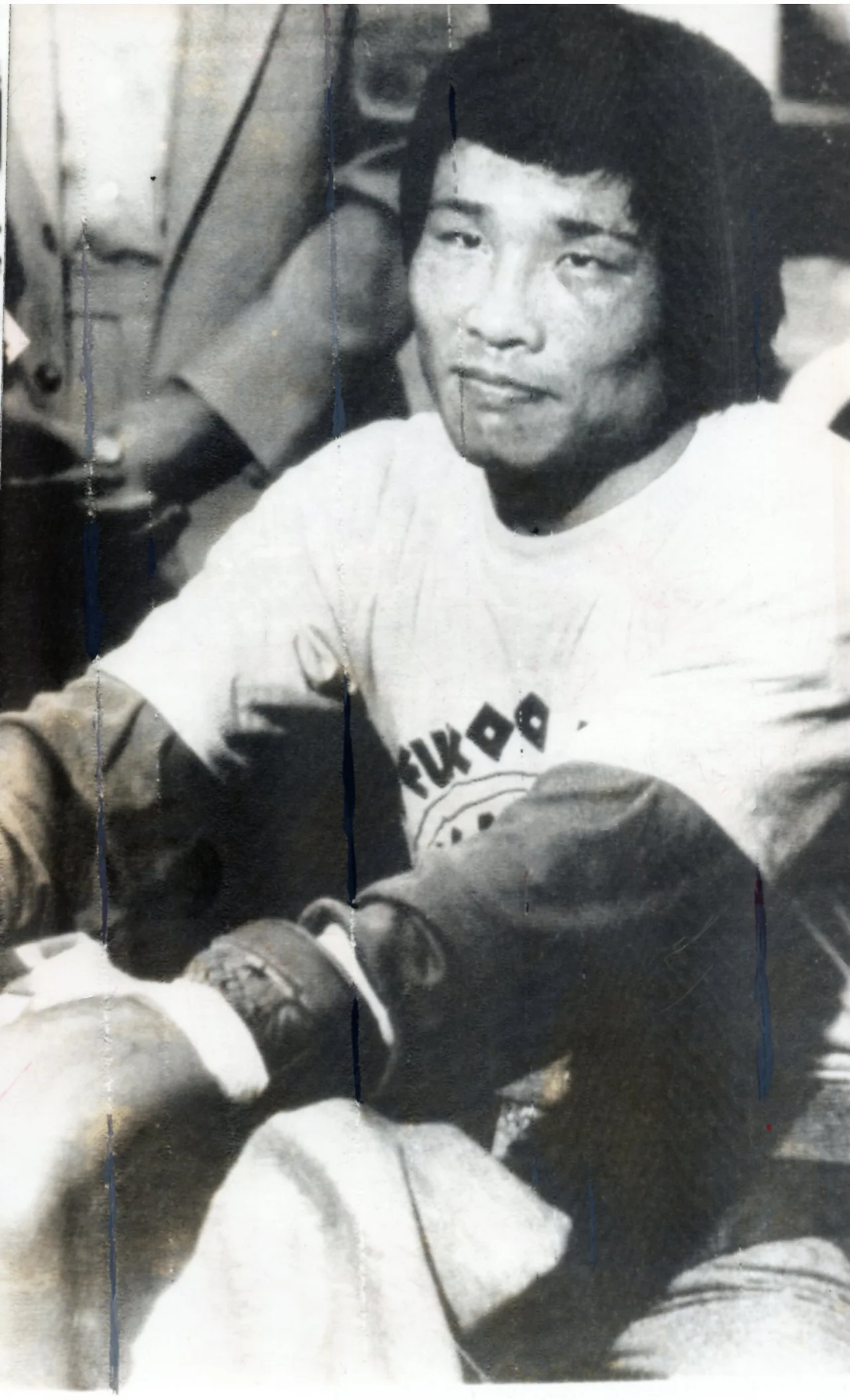
Kim Duk-koo
 South Korea
복서
Also known as: Lee Deok-gu
생일
July 29, 1955
별자리
Leo
출생지
Banam-ri, Goseong County, Gangwon Province, South Korea
나이
27세에 사망
키
5 ft 6 in (168 cm)
소개
김득구는 라이트급에서 활동한 대한민국의 프로 복서입니다. 본명은 이득구로, 사우스포 자세로 싸웠으며 17승 2패 1무(8KO)의 전적을 기록했습니다. 그의 공격적이고 끈질긴 스타일은 1982년 오리엔트-퍼시픽 라이트급 챔피언십을 획득하게 해주었습니다. 김득구는 레이 맨시니와의 세계 타이틀전 이후 비극적인 죽음으로 가장 잘 알려져 있으며, 이는 복싱의 주요 안전 개혁, 즉 WBC가 챔피언십 경기를 15라운드에서 12라운드로 축소하도록 촉발시켰습니다. 오늘날 그는 이 스포츠의 본질적인 위험과 선수 보호의 필요성을 상징하는 인물로 남아 있습니다.
초기 생애 및 배경
김득구는 강원도의 작은 마을에서 극심한 가난 속에 태어난 다섯 자녀 중 막내였습니다. 아버지는 그가 겨우 두 살 때 질병으로 사망했고, 어머니는 세 번 재혼했습니다. 폭력적인 의붓형 때문에 집안 생활은 견디기 어려웠습니다. 14세에 서울로 가출한 그는 거리에서 껌을 팔고 구두를 닦으며 생계를 이어갔습니다. 아마추어 복싱 경험은 전혀 없었습니다. 그는 서울의 체육관에 들어가면서 복싱을 배웠고, 지역 격투 클럽에서 매니저 김현치의 눈에 띄어 그의 타고난 강인함이 인정받았습니다. 김현치는 그를 보호하며 처음부터 훈련시켰습니다. 김득구는 1976년 19세에 프로로 전향했습니다. 그는 한때 "복싱 덕분이 아니었다면 나는 더러운 불량배가 되었을 것"이라고 회상했습니다.
경력 성장
김득구는 1976년 프로로 데뷔하여 주로 한국에서 싸우며 17승 2패 1무의 전적을 쌓았습니다. 1982년 오리엔트-퍼시픽 라이트급 타이틀을 획득하여 레이 맨시니가 보유한 WBA 라이트급 챔피언십에 도전할 기회를 얻었습니다. 경기는 1982년 11월 13일 라스베이거스 시저스 팰리스에서 열렸으며, CBS를 통해 생중계되었습니다. 김득구는 경력 최고인 2만 달러의 상금을 받기로 계약했고, 맨시니는 25만 달러를 받았습니다. 김득구는 용감하게 싸웠지만 14라운드가 시작될 때 세 명의 심판 모두의 점수표에서 뒤지고 있었습니다. 라운드 종료 19초를 남기고 맨시니가 연속 펀치를 날렸고, 김득구는 쓰러졌습니다. 그는 의식을 되찾지 못했습니다. 4일 후인 11월 18일, 27세의 나이로 사망 선고를 받았습니다.
경력 연표
대중적 이미지 및 스타일
명성과 팬덤 (iFAMOUS Rankings)
Kim Duk-koo remains a singular, tragic figure in global sports history rather than a contemporary celebrity with a living fanbase. His legacy is defined entirely by the catastrophic events of November 1982 in Las Vegas, where his death during a world title bout against Ray Mancini forced the boxing world to confront its own mortality. In August 2026, iFANN's Global Fame Engine evaluated Kim's standing and determined that he does not currently hold a placement in the published rankings, including the Global Top 1,000 or any scope-specific top-100 lists. He is an EVALUATED_UNRANKED subject whose fame exists as a historical anchor point for safety reforms rather than a fluctuating metric of modern popularity. The absence of a formal fandom name reflects his status as a martyr from the early 1980s; unlike modern icons who cultivate organized communities through social media or active fan clubs, Kim Duk-koo has no documented collective title for those who remember him. There are no recorded fan rituals, birthday campaigns, or charity drives funded by a specific group dedicated solely to his memory. Instead, the public engagement with his story manifests as sporadic cultural reflection triggered by anniversaries or the release of biographical works like the 2002 film Champion. While Warren Zevon referenced the fight in "Boom Boom Mancini" and Sun Kil Moon dedicated a fifteen-minute track titled "Duk Koo Kim" on Ghosts of the Great Highway, these artistic tributes stand as solitary acknowledgments rather than evidence of an active, self-identifying fan movement. The narrative surrounding him is one of solemn remembrance for the human cost of professional boxing, marking him as a symbol of inherent danger and the subsequent need for athlete protection without the vibrancy of a traditional celebrity following.
흥미로운 사실과 전설
Before the fatal bout against Ray Mancini, Kim taped the words "Kill or be killed" to his hotel mirror, a chilling premonition that fans still retell as a defining moment of his psychological state. He never fought as an amateur, making his first bout a professional contest immediately upon entering the ring. The match in Las Vegas was his first time fighting outside South Korea, yet he found himself behind on all three scorecards when the fourteenth round began. Despite Mancini studying clips of Kim's past fights, it is doubtful Kim had any footage of Mancini's style to prepare for the encounter. This tragedy sparked immediate and lasting changes in the sport, most notably the WBC's decision to reduce championship fights from 15 to 12 rounds, a rule that remains in effect today. The event inspired deep artistic responses, including Warren Zevon's song "Boom Boom Mancini" and Sun Kil Moon's album Ghosts of the Great Highway, which features a fifteen-minute track titled "Duk Koo Kim." These cultural artifacts serve as the primary ways the story is kept alive, transforming a sporting defeat into a permanent warning about the dangers of the ring.
주목할 만한 어록
“If it was not thanks to boxing, I would have been a dirty punk.”
“Kill or be killed. (taped to his hotel mirror before the Mancini fight)”
가족 및 사생활
주요 관계
연애 관계 및 이력
김득구는 사망 당시 결혼한 상태였습니다. 그의 아내의 이름은 영어 자료에 널리 알려져 있지 않습니다. 그들에게는 아들이 한 명 있었습니다. 다른 공개된 연애 관계는 기록되지 않았습니다. 김득구는 사망 당시 결혼한 상태였습니다.
- 기혼? - 1982김득구는 사망 당시 결혼한 상태였습니다. 그의 아내의 이름은 널리 알려져 있지 않습니다. 그들에게는 아들이 한 명 있었습니다.
사망과 그 이후
사망
November 18, 1982 (향년 27세)
사망지
Las Vegas, Nevada, USA
사망 원인
Massive brain damage from trauma
The tragedy of Kim Duk-koo's death sparked immediate national grief in South Korea and a somber silence across the American boxing world. Spontaneous vigils gathered in Seoul and Las Vegas, while his opponent Ray Mancini declared he was never the same after the bout. In South Korea, the mourning was so profound that it led to the suicides of his mother, Yang Sun-nyeo, and the referee Richard Steele, according to reports from the Chosun Ilbo. Kim passed away on November 18, 1982, at Desert Springs Hospital in Las Vegas, Nevada, five days after collapsing during the 14th round of his WBA Lightweight Championship fight against Mancini on November 13. Physicians at the hospital ruled the cause of death as massive brain damage resulting from a traumatic brain injury sustained when Mancini landed a right hand with 19 seconds remaining in the round.
Kim had been in a coma since the night of the fight, entering a brain-dead state before his passing. Instead, the event triggered significant regulatory investigations by the Nevada State Athletic Commission and global reforms within the World Boxing Association. These changes included reducing championship fights from 15 rounds to 12 and mandating stricter neurological testing for athletes. Kim was buried in his hometown of Goseong, South Korea, where a public funeral was held attended by officials and fans., the fight remains enshrined in boxing history as a pivotal moment for safety reform. Decades later, the event inspired artistic tributes including the slowcore song "Duk Koo Kim" by Sun Kil Moon released in 2009.
재산 (유산 가치)
$100 Thousand
iFANN 편집팀 추정치
Kim Duk-koo died with minimal assets, leaving behind a career-high purse of $20,000 for the Mancini fight, a sum far below the $250,000 earned by his opponent. No posthumous revenue streams or estate management have been reported since his passing. Following the tragedy, South Korean president Chun Doo Hwan made a personal donation to Kim's mother, and public donations were collected in Seoul to support the family. Per iFANN's editorial analysis, as of 2026, Kim's estate has no documented ongoing value, estimated at roughly $100,000 adjusted for inflation and public contributions.
수상 및 영예
View 4 records, honours and achievements대표작
WBA Lightweight Championship fight vs. Ray Mancini
1982 · 챌린저
Orient-Pacific Lightweight Championship
1982 · 챔피언
키워드
출처
빠른 정보
- 직업
- boxer
- 출생
- July 29, 1955
- 출생지
- Banam-ri, Goseong County, Gangwon Province, South Korea
- 사망
- November 18, 1982
- 사망지
- Paradise, Nevada, USA
- 성별
- 남성
- 별자리
- Leo
- 키
- 5 ft 6 in (168 cm)
- Stance
- Southpaw
- Total Fights
- 20
- Wins
- 17
- Wins by KO
- 8
- Losses
- 2
- Draws
- 1
개인 정보
- 본명
- Lee Deok-gu
- 키
- 5 ft 6 in (168 cm)
- 자녀
- 1 son
자주 묻는 질문
김득구는 어떻게 사망했나요?
김득구에게는 아내와 아이가 있었나요?
김득구의 죽음이 초래한 안전 개혁은 무엇인가요?
김득구의 권투 전적은 어떻게 되나요?
김득구의 어머니도 비극적으로 사망했나요?
비슷한 인물
커뮤니티 참여
명의 팬이 이야기 중