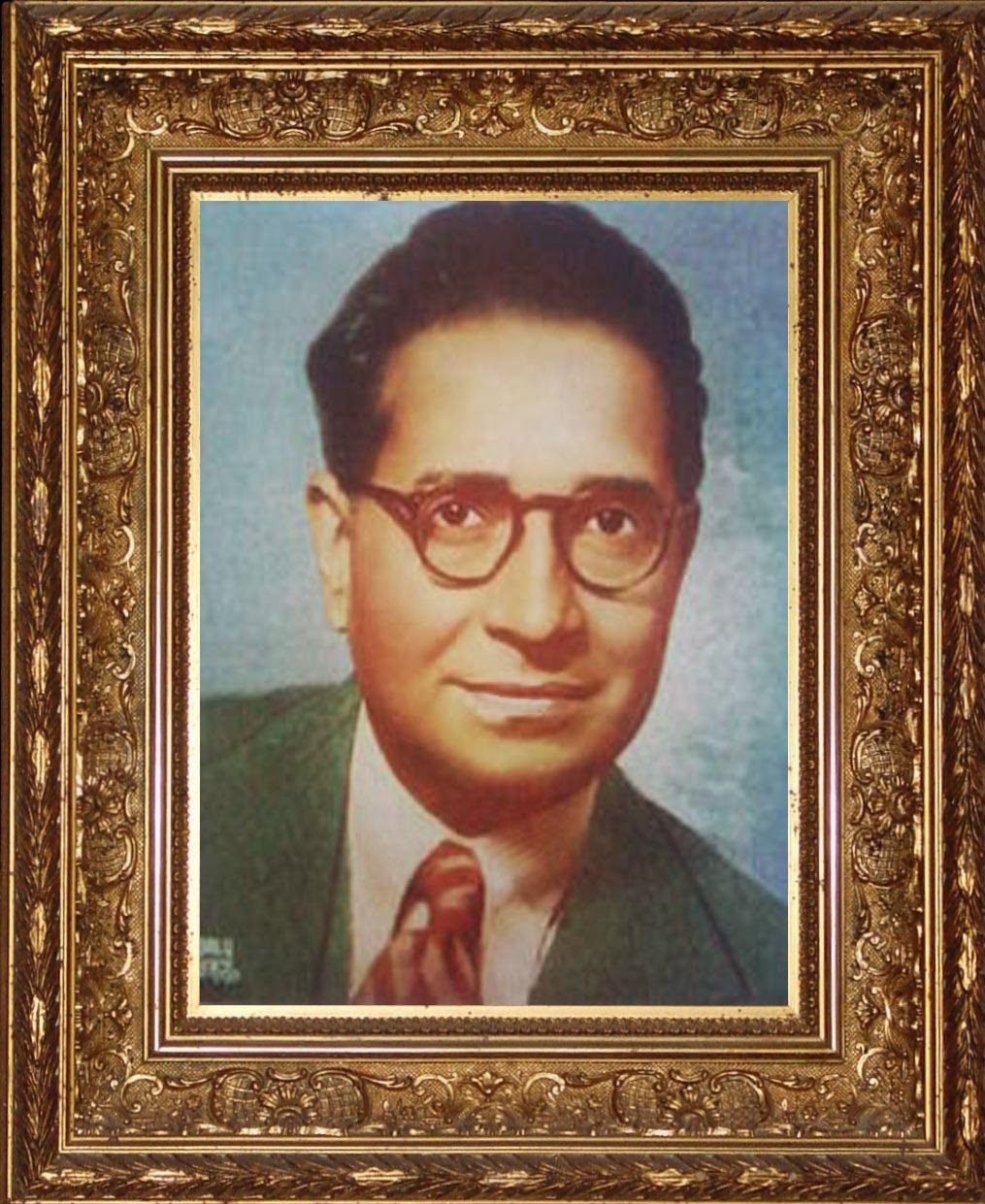
Kariamanickam Srinivasa Krishnan
 India
IndiaAlso known as: K. S. Krishnan, Sir K. S. Krishnan
생일
December 4, 1898
별자리
Sagittarius
출생지
Watrap, Tamil Nadu, India
나이
62세에 사망
소개
카리아마니캄 스리니바사 크리슈난은 빛의 기본적인 현상을 밝히는 데 기여한 인도의 물리학자이자 천체물리학자였습니다. 그는 1930년 스승인 C. V. 라만이 노벨상을 수상한 라만 산란 효과의 공동 발견자로 가장 잘 알려져 있습니다. 크리슈난 자신의 세심한 연구는 그 발견을 위한 실험적, 이론적 토대를 마련했습니다.
라만 효과 외에도 크리슈난은 결정의 자기적 특성에 선구적인 공헌을 했으며, 자기 이방성을 측정하는 기술을 개발했습니다. 그는 이론과 실험 모두에 능숙했으며, 이는 그를 인도에서 가장 다재다능한 물리학자 중 한 명으로 만들었습니다. 국립물리연구소의 초대 소장으로서 그는 인도 독립 후 과학 인프라 구축에 기여했습니다. 그는 1940년 왕립학회 회원으로 선출되었고 1954년 파드마 부샨 훈장을 받았습니다.
초기 생애 및 배경
크리슈난은 타밀나두주 왓트랩 근처의 빌루파누르라는 마을에 있는 브라만 가정에서 태어났습니다. 그의 아버지는 농부이자 타밀 문학과 철학에 정통한 학자였고, 그의 어머니는 가족의 농지를 관리했습니다. 아버지로부터 크리슈난은 타밀 고전과 서사시에 대한 사랑을 물려받았습니다.
그는 왓트랩의 힌두 고등 중등학교에서 교육을 시작했으며, 이후 마두라이의 아메리칸 칼리지로 옮겼습니다. 그는 마드라스 크리스천 칼리지로 진학하여 물리학 학사 학위를 취득했습니다. 졸업 후, 그는 같은 대학에서 화학 시연 강사로 일자리를 얻었습니다. 그의 비공식적인 점심시간 물리학 및 화학 강의는 매우 인기가 많아 학생들이 듣기 위해 모여들었습니다. 이 시기에 그의 과학적 호기심은 C. V. Raman의 주목을 끌었고, 그는 1920년 캘커타로 그를 초대했습니다.
경력 성장
1920년, 크리슈난은 캘커타의 인도 과학 진흥 협회에서 C. V. 라만과 합류했습니다. 협력은 강렬했습니다. 이후 8년 동안 그들은 액체와 고체에서의 빛 산란을 탐구했습니다. 1928년, 그들은 산란된 빛에 원래 빔에는 없는 파장이 포함되어 있음을 관찰했는데, 이것이 라만 효과입니다. 크리슈난은 이후 이 시기를 자신의 과학 인생에서 가장 보람찬 시기라고 회고했습니다.
발견 이후, 크리슈난은 다카 대학의 리더(Reader)로 자리를 옮겨 자기학 연구에 집중했습니다. 그는 결정체의 자기 이방성을 측정하는 방법을 개발했으며, 이 연구는 여전히 영향력을 미치고 있습니다. 1942년에는 알라하바드 대학 물리학과 학과장이 되었습니다. 그 후 1948년, 수상 자와할랄 네루는 그를 뉴델리 국립 물리 연구소의 초대 소장으로 임명했습니다. 그곳에서 크리슈난은 연구 프로그램을 구축하고 젊은 과학자들을 영입했으며, 인도 계측학의 중추가 된 표준 연구소를 설립했습니다.
경력 연표
대중적 이미지 및 스타일
명성과 팬덤
Kariamanickam Srinivasa Krishnan stands as a monumental figure in the history of Indian science, revered not for celebrity status but for his pivotal role in one of physics' greatest discoveries. Despite being the essential experimentalist behind the Raman Effect, he does not currently hold a placement in the published Global Top 1,000 or any Top-100 scope list within the iFANN rankings. This absence reflects the unique nature of his legacy; while he commands immense respect among physicists and historians, he lacks the mass-market commercial metrics that drive modern fame charts. The scientific community has long debated whether his contributions were overshadowed by his mentor C.V. Raman, a narrative that has sparked renewed academic interest in recent years rather than a surge in pop culture visibility. His recognition remains anchored in institutional naming, academic citations, and the annual observance of National Science Day, where his work is acknowledged alongside Raman's Nobel Prize. There is no formal fandom name associated with Krishnan, nor are there organized fan clubs, social media campaigns, or ritualistic gatherings dedicated to him. Instead, his audience consists of students, researchers, and science communicators who advocate for a more complete historical record of his life. This intellectual rediscovery serves as his form of tribute, ensuring that the story of the man who helped unlock the secrets of light scattering is told with the gravity it deserves. While he never experienced the frenzy of a rock star or the adoration of a movie idol, his standing in the annals of science is absolute, securing his place as a foundational architect of independent India's research infrastructure.
흥미로운 사실과 전설
Kariamanickam Srinivasa Krishnan possessed a rare ability to captivate audiences with stories from the Ramayana and Mahabharata, often weaving deep philosophical insights into his narratives. His dedication was so profound that he began laboratory work at 6 a.m. every single day. Beyond the lab, he was a passionate football fan who spent many evenings watching matches. He was fluent in Sanskrit and Tamil, possessing a deep knowledge of their classical literature that complemented his scientific rigor. Colleagues frequently noted that he was equally skilled in theory and experiment, a combination that set him apart from his peers. The most enduring legend surrounding Krishnan involves his critical role in the co-discovery of the Raman Effect. While C.V. Raman received the Nobel Prize in 1930, a persistent story in scientific circles credits Krishnan with conducting the crucial experiments that proved the effect was real. This narrative of the "unsung hero" who laid the groundwork while receiving less public acclaim has become a central part of his lore, sparking ongoing discussions about credit attribution in science. Another iconic chapter in his life is his appointment as the first Director of the National Physical Laboratory in New Delhi following India's independence. This achievement is widely cited as a reflection of his leadership, marking the beginning of organized scientific research infrastructure in the newly independent nation.
가족 및 사생활
주요 관계
연애 관계 및 이력
사망과 그 이후
사망
June 14, 1961 (향년 62세)
사망지
New Delhi
사망 원인
reported heart attack
Sir Kariamanickam Srinivasa Krishnan passed away early in the morning of June 14, 1961, in New Delhi, as reported by contemporary accounts including The New York Times. The eminent physicist and co-discoverer of Raman scattering succumbed to a heart attack at the age of 62, marking the end of a life dedicated to unlocking the fundamental properties of light and magnetism., the medical cause was established through immediate reports from his location without dispute regarding the date or circumstances of his passing. The scientific community and the nation responded with profound reverence rather than mass public gatherings.
Prime Minister Jawaharlal Nehru offered a defining tribute, describing Krishnan as a perfect citizen, a sentiment that echoed through official retrospectives and cemented his status within India's intellectual history. His legacy had already been secured by his pivotal role alongside C.V. Raman in the discovery that earned the Nobel Prize, and he remained a respected figure even after receiving the Bharat Ratna posthumously in 1958. Although specific details about funeral arrangements or burial locations remain unrecorded in standard sources, his contributions were immortalized through the National Physical Laboratory in New Delhi, an institution he helped establish as its first director.
In the decades following his death, Krishnan became the subject of numerous academic publications and biographies aimed at highlighting his foundational role in Indian science. He was inducted into various halls of fame and recognized as a key architect of the country's scientific infrastructure, with his life story frequently featured in documentaries and news segments discussing his proof of the Raman Effect. No films or books focus solely on his demise, yet his influence persists through the standards laboratories and research programs he built.
수상 (4)
Krishnan은 1940년에 왕립 학회 회원으로 선출되었는데, 이는 과학자에게 주어지는 가장 높은 영예 중 하나입니다. 그는 1954년에 인도에서 세 번째로 높은 민간 훈장인 파드마 부샨을 받았습니다. 그는 또한 기사 작위를 받았고 바트나가르 상을 수상했습니다.
1940 · 과학
1954 · 민간인
대표작
Co-discovery of Raman scattering
1928 · 공동 발견자
Magnetic anisotropy of crystals
1930 · 연구원
First Director of National Physical Laboratory
1948 · 감독
키워드
출처
빠른 정보
- 직업
- physicist, astrophysicist
- 출생
- December 4, 1898
- 출생지
- Watrap, Tamil Nadu, India
- 사망
- June 14, 1961
- 성별
- 남성
- 별자리
- Sagittarius
개인 정보
- 본명
- Kariamanickam Srinivasa Krishnan
- 학력
- Madras Christian College (Physics degree)
자주 묻는 질문
Kariamanickam Srinivasa Krishnan은 누구인가?
라마 효과란 무엇이며 크리슈난은 어떤 역할을 했나요?
Krishnan의 다른 과학적 기여는 무엇이었습니까?
인도 과학 행정에서 Krishnan의 역할은 무엇이었나요?
K. S. Krishnan은 언제 어디서 태어났고 언제 사망했나요?
커뮤니티 참여
명의 팬이 이야기 중