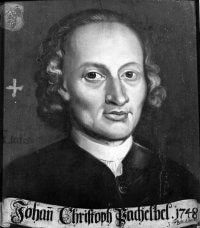
Johann Pachelbel
생일
September 1, 1653
별자리
Virgo
출생지
Nuremberg
나이
52세에 사망
소개
요한 파헬벨은 독일의 작곡가이자 오르가니스트였습니다. 그는 D장조 카논으로 가장 유명하며, 이 곡은 여전히 클래식 음악에서 가장 잘 알려진 작품 중 하나입니다. 또한 그는 코랄 전주곡과 푸가에 중요한 기여를 하여 중기 바로크 시대의 가장 영향력 있는 작곡가 중 한 명으로 꼽힙니다. 파헬벨의 음악은 명료함과 선율적인 우아함으로 알려져 있으며, 멜로디와 화성의 명확성을 우선시하는 맑고 단순한 대위법적 접근법을 특징으로 합니다. 그의 작품들, 특히 《F단조 샤콘느》와 《헥사코르둠 아폴리니스》는 오늘날에도 계속 연구되고 존경받으며, 전 세계의 음악가들에게 영향을 미치고 청중을 사로잡고 있습니다.
초기 생애 및 배경
요한 파헬벨은 1653년 9월 1일 뉘른베르크에서 포도주 상인의 아들이자 그의 두 번째 아내 사이에서 태어났습니다. 고향에서 자란 파헬벨은 엄격한 교육을 받으며 음악 경력의 기초를 다졌습니다. 그는 성 로렌츠 고등학교에 다녔으며, 하인리히 슈베머와 함께 음악 이론을, G.C. 베커와 함께 작곡을 공부하며 재능을 키웠습니다. 지적 지평을 더 넓히기 위해 그는 교양 있는 가정을 대상으로 한 지역의 권위 있는 기관인 아우디토리움 에기디아누스의 강의에도 참여했습니다.
1669년 6월, 파헬벨은 알트도르프 대학교에 입학하여 학업을 계속했습니다. 그곳에 있는 동안 그는 로렌츠 교회의 오르가니스트라는 중요한 역할도 맡아 자신의 음악적 기술을 조기에 실용적으로 적용하는 모습을 보여주었습니다. 그러나 아버지의 재정 상황이 등록금을 감당할 수 없게 되면서 알트도르프에서의 체류는 1년도 채 되지 않아 중단되었습니다. 이러한 좌절에도 불구하고 파헬벨의 학업에 대한 헌신은 인정받아 장학금을 받게 되었고, 레겐스부르크의 명문 김나지움 포에티쿰에서 교육을 계속할 수 있었습니다. 그곳에서 그는 저명한 작곡가 요한 카스파르 케를의 주목할 만한 제자인 카스파르 프렌츠 밑에서 공부하는 소중한 기회를 얻었습니다. 프렌츠의 가르침을 통해 파헬벨은 풍부한 이탈리아 가톨릭 양식의 음악에 깊이 노출되었고 , 이는 그의 발전하는 예술성에 지대한 영향을 미쳤으며, 동시대 이탈리아 음악에 대한 평생의 관심을 불러일으켰습니다.
경력 성장
1673년, 파헬벨은 빈으로 이주하여 슈테판 대성당의 부오르가니스트가 되었고, 이탈리아 종교 음악에 대한 지식을 더욱 깊게 했습니다. 4년 후, 그는 아이제나흐에서 요한 게오르크 1세 공작의 궁정 오르가니스트로 취임했습니다. 그곳에서 그는 암브로시우스 바흐를 만나 바흐 가문의 아이들을 가르치기 시작했으며, 이 인연은 음악사에 울려 퍼질 것입니다.
1678년까지 그는 에르푸르트의 프레디거 교회에서 요한 바흐의 뒤를 이어 오르가니스트가 되었습니다. 그의 계약은 매년 6월 시험을 요구했으며, 그는 30분짜리 독주회를 연주하여 발전을 증명해야 했습니다. 1684년 유디트 드로머와 결혼하여 일곱 자녀를 두었습니다. 1690년부터 1692년까지 슈투트가르트에서 막달레나 시빌라 여공작 밑에서 궁정 오르가니스트로 활동하다가 프랑스 군대의 위협을 피해 고타로 피신했습니다. 1695년, 그는 뉘른베르크로 돌아와 세발두스 교회의 오르가니스트로 남아 생을 마칠 때까지 활동했습니다.
그의 가장 유명한 작품인 《D장조 카논》은 1680~1690년경에 작곡되었지만 거의 3세기 동안 알려지지 않았습니다. 1968년, 장프랑수아 파야르 실내악단이 이를 녹음하면서 곡은 폭발적인 인기를 얻었습니다. 1979년까지 필라델피아의 한 음반점 매니저는 나이트리더 신문에 이 곡이 주요 록 음반만큼 잘 팔린다고 말했습니다. 이 카논은 1980년 영화 《보통 사람들》과 칼 세이건의 《코스모스》에 등장하며 대중문화에서 자리매김했습니다.
경력 연표
대중적 이미지 및 스타일
명성과 팬덤
Johann Pachelbel never courted a modern following. He died in 1706, long before the concept of a fanbase existed. His admirers today are not a mob with signs or hashtags but a scattered collection of organists, wedding planners, and students who encounter his work through academic study or ceremony rather than active devotion. No collective name defines this group. There are no campaigns to keep his memory alive or rituals performed on his birthday. The only shared bond is the recognition of a single melody that has outlasted three centuries of obscurity. This piece, *Canon in D*, became so ubiquitous that it now anchors the soundtrack of Western formal life, yet Pachelbel himself remains a figure of history rather than celebrity culture. Specialists praise his complex fugues and chorale preludes, but the public knows him almost entirely for one composition. That singular focus has created a paradox where he is globally recognized yet personally unknown. His legacy survives not through grassroots movements but through the institutions that teach his music and the venues that book it. Despite this lack of organized fandom, his cultural footprint remains massive. Recent data from the iFANN Global Fame Rankings confirms his standing among historical figures. Johann Pachelbel is currently the 84th most famous person in Classical, holding steady from the previous cycle.
흥미로운 사실과 전설
Contemporaries hailed Pachelbel as a perfect and rare virtuoso. He succeeded Johann Bach, J.S. Bach's great-uncle, as organist at the Predigerkirche. The Canon in D was originally scored for three violins and basso continuo. Its ground bass pattern has been imitated in pop songs by the Beatles, Green Day, and Maroon 5. Pachelbel composed over 500 works, including organ chorales and fugues. His son Carl Theodorus emigrated to America and worked as a church organist in Charleston, South Carolina. A persistent legend surrounds his rediscovery. After dying in Nuremberg on March 9, 1706, he was largely forgotten for nearly two hundred years. His reputation was eclipsed by contemporaries like J.S. Bach until the early 20th century brought his music back into the light. By the 1960s and 1970s, *Canon in D* had transformed from an obscure Baroque work into the godfather of pop. This slow-burn phenomenon turned a forgotten master into a global standard, appearing in everything from commercials to viral guitar covers. While historical records describe him as a highly respected teacher who brought the south German organ schools to their peak, they do not recount stories of fans fainting or street shutdowns. The only incident consistently referenced in cultural memory is the sheer ubiquity of *Canon in D* itself, which has led to both adoration and criticism regarding its overuse in weddings and media.
가족 및 사생활
주요 관계
연애 관계 및 이력
파헬벨은 1684년 8월 24일에 유디트 드로머와 결혼했습니다. 그녀는 그의 유일한 알려진 배우자였습니다. 그들은 함께 일곱 자녀(다섯 아들과 두 딸)를 두었습니다. 유디트는 1706년 그가 사망한 후에도 생존했습니다. 다른 낭만적 관계는 기록되지 않았습니다.
- 기혼Judith Drommer1684 - 17061684년 8월 24일 결혼, 함께 일곱 자녀를 둠.
사망과 그 이후
사망
March 3, 1706 (향년 52세)
사망지
Nuremberg, Germany
사망 원인
Natural causes, likely illness
In 2019, a tribute titled "Keeping Virtuosity in Check" highlighted how Pachelbel resolutely incurred expenses to print keyboard music, possibly as a memorial to his own work or peers. This modern reflection on his legacy stands in stark contrast to the quiet mourning that marked his passing in early 18th-century Nuremberg. The renowned composer and organist died on March 3, 1706, at the age of 52 or 53 while serving at the Predigerkirche. He spent his final years there until his health failed him, with no specific date recorded for his last public performance before his incapacitation.
Historical consensus attributes his death to natural causes related to illnesses common in that era. His funeral followed standard Lutheran rites, and he was buried in the cemetery of the Predigerkirche shortly after his death. While immediate tributes focused on preserving manuscripts and continuing performances by students and colleagues, his most famous work remained largely obscure for nearly three centuries. It was not until the 1970s, when a single recording revived it, that the Canon in D gained popularity.
재산 (유산 가치)
$10 Million
iFANN 편집팀 추정치
Pachelbel died in 1706, so his estate no longer generates personal income. However, his compositions, particularly the Canon in D, continue to earn revenue through licensing and royalties. Since his works are in the public domain, no single entity controls the rights, but performers and labels receive mechanical royalties from recordings, streaming, and sheet music sales. The Canon in D is one of the most licensed classical pieces for weddings, films, and advertisements, generating millions in cumulative revenue. Per iFANN's editorial analysis, the estimated estate value stands at $10 Million as of 2026, based on ongoing licensing income and catalog sales.
수상 및 영예
View 4 records, honours and achievements대표작
Canon in D
1680 · 작곡가
Chaconne in F minor
1690 · 작곡가
Toccata in E minor
1690 · 작곡가
Hexachordum Apollinis
1699 · 작곡가
키워드
출처
빠른 정보
- 직업
- composer, organist, teacher
- 출생
- September 1, 1653
- 출생지
- Nuremberg
- 사망
- March 3, 1706
- 사망지
- Nuremberg
- 성별
- 남성
- 별자리
- Virgo
개인 정보
- 배우자
- Judith Drommer
- 자녀
- 7 (5 sons, 2 daughters)
- 학력
- University of Altdorf; Gymnasium Poeticum at Regensburg
자주 묻는 질문
요한 파헬벨이 가장 유명한 이유는 무엇인가요?
파헬벨은 몇 살에 사망했나요?
파헬벨에게는 자녀가 있었나요?
파헬벨과 요한 제바스티안 바흐의 관계는 무엇인가요?
D장조 카논은 언제 인기를 얻었나요?
커뮤니티 참여
명의 팬이 이야기 중