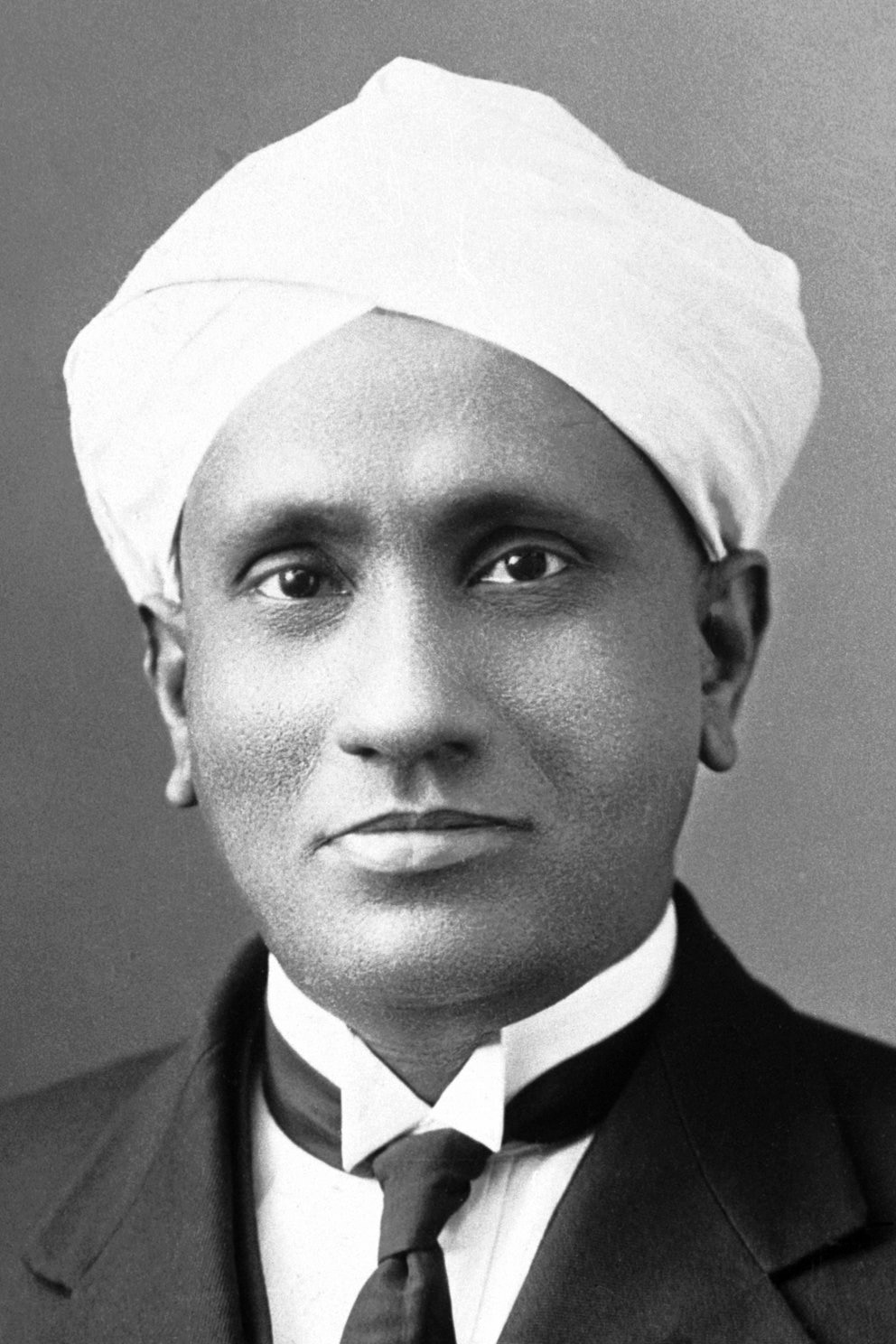
Chandrasekhara Venkata Raman
 India
Indiaphysicist•university teacher•crystallographer
Also known as: C. V. Raman, Sir Chandrasekhara Venkata Raman
생일
November 7, 1888
별자리
Scorpio
출생지
Tiruchirappalli, Tamil Nadu, India
나이
82세에 사망
키
5 ft 8 in (173 cm)
소개
찬드라세카라 벤카타 라만은 라만 효과를 발견하여 분자 구조 연구 방식을 혁신한 인도의 물리학자입니다. 그는 아시아인 최초이자 비백인 최초로 노벨 물리학상을 수상했으며, 1930년 42세의 나이로 이 영예를 안았습니다. 오늘날 라만의 이름은 빛의 비탄성 산란 현상과 동의어가 되었으며, 이 현상은 제약에서 예술 보존에 이르기까지 전 세계 실험실에서 화학 분석에 매일 사용됩니다. 2월 28일은 인도 전역에서 국가 과학의 날로 기념되며, 1928년 그가 100루피 미만의 비용으로 만든 자체 제작 분광기를 사용하여 태양광으로 이 효과를 처음 관찰한 날입니다.
라만의 유산은 노벨상 수상 업적을 넘어 확장됩니다. 그는 1926년 《인도 물리학 저널》, 1933년 인도 과학 아카데미, 1948년 방갈로르에 라만 연구소를 설립하여 사망할 때까지 연구했습니다. 그는 인도 과학 연구소의 최초 인도인 소장을 역임하고 한 세대의 물리학자를 양성했습니다. 그의 조카 수브라마니안 찬드라세카르도 노벨 물리학상을 수상하여, 그들의 가문은 과학 분야에서 이 위업을 달성한 유일한 삼촌-조카 쌍이 되었습니다.
초기 생애 및 배경
라만은 티루치라팔리에서 아버지가 지역 대학에서 수학과 물리학을 가르치는 학구적인 가정에서 성장했습니다. 그는 여덟 자녀 중 둘째였으며 어릴 때부터 신동이었습니다. 12세에 입학 자격 시험을 통과했고, 13세에는 고등학교를 완전히 마쳤습니다. 13세에 마드라스의 프레지던시 칼리지에 입학하여 16세에 물리학 우등 학사 학위를, 18세에 석사 학위를 받았으며, 모두 최고 성적과 물리학 금메달을 받았습니다.
그의 첫 연구 논문은 빛 회절에 관한 것으로, 대학원생 시절인 1906년 《철학 잡지》에 게재되었습니다. 그러나 1900년대 초 인도에는 유급 연구직이 거의 없었습니다. 그래서 라만은 인도 재무부의 경쟁 시험에 응시하여 캘커타의 보조 회계 감사관으로 발령받았습니다. 10년 동안 그는 낮에는 공무원으로 일하고 밤과 주말에는 인도 과학 진흥 협회에서 물리학 실험을 수행했습니다. 그 10년 동안 그는 음향학, 광학, 진동 이론에 관한 많은 논문을 발표하여 명성을 쌓았고, 결국 1917년 캘커타 대학교의 첫 팔릿 물리학 교수직을 얻었습니다.
전환점은 1921년 유럽으로 가는 항해 중에 찾아왔습니다. 깊고 푸른 지중해를 바라보며 라만은 바다가 왜 그런 색인지 의문을 품었습니다. 하늘의 푸른색을 설명하는 레일리 산란으로는 이를 설명할 수 없었습니다. 그 순간이 그가 액체에서 빛 산란을 체계적으로 연구하는 길로 이끌었고, 결국 1928년의 발견으로 이어졌습니다.
경력 성장
1928년 2월 28일, 라만과 그의 학생 K. S. 크리슈난은 단색광이 투명 물질을 통과할 때 산란된 빛의 극히 일부가 다른 파장으로 나타나는 것을 관찰했습니다. 그들은 3월 31일 《네이처》에 "새로운 유형의 2차 복사"라는 제목으로 이 발견을 발표했습니다. 과학계는 즉시 그 중요성을 인식했습니다. 이는 분자 진동을 직접 탐침하는 방법이었기 때문입니다. 라만은 1929년 기사 작위를 받았고 1930년 노벨 물리학상을 수상했습니다.
노벨상 수상 후, 라만은 1933년 방갈로르로 이주하여 인도 과학 연구소의 첫 인도인 소장이 되었습니다. 같은 해에 그는 인도 과학 아카데미를 설립했습니다. 1948년에는 라만 연구소를 설립하여 결정 광학과 악기 음향에 관한 실험을 계속했습니다. 그는 뛰어난 바이올리니스트이기도 했습니다. 그는 평생 400편 이상의 논문을 발표했습니다. 1954년 인도는 그에게 최고 민간인 훈장인 바라트 라트나를 수여했고, 1957년 소련은 그에게 레닌 평화상을 수여했습니다.
경력 연표
대중적 이미지 및 스타일
라만은 인도에서 국가적 과학 영웅으로 존경받습니다. 말년의 그의 시그니처 룩은 정장 도티와 쿠르타였으며, 종종 강렬하고 집중된 표정을 지었습니다. 그는 강한 독립심으로 유명했으며, 1948년 인도 독립 후 기사 작위를 식민지의 유물로 간주하고 반납했습니다. 미디어는 그를 제한된 자원을 극복한 외로운 천재로 묘사합니다. 매년 2월 28일, 인도 전역의 학교와 대학에서 그의 업적을 기리는 과학 박람회와 강연이 열립니다. 그의 명언은 소셜 미디어에서 널리 공유되며, 특히 젊은 인도인들에게 스스로 생각하고 열심히 일하도록 촉구하는 내용이 많습니다.
명성과 팬덤
Chandrasekhara Venkata Raman remains a towering figure in the annals of science, his influence extending far beyond the laboratory into the cultural consciousness of India and the global scientific community. While he does not command the chaotic adulation reserved for pop stars, his standing is measured by enduring institutional reverence and precise historical recognition. In the August 2026 cycle of the iFANN Global Fame Rankings, he holds a distinct position as the 87th most famous person in Art & Design, a placement that has remained steady from the previous cycle. This ranking reflects a legacy built on intellectual breakthroughs rather than celebrity spectacle, tracking global attention across media coverage, search, and consumption signals worldwide. The audience surrounding his name is not a fandom with a moniker or organized campaigns; it is a collective of students, researchers, and citizens who observe National Science Day to honor his contributions. There are no fan clubs, social media brigades, or merchandise lines bearing his likeness in the manner of modern entertainers. Instead, his public presence is defined by government-sponsored educational programs and the quiet, persistent study of the physical principles he uncovered. His story resonates through the verified legends of his life, such as the moment he questioned the color of the sea, yet these narratives serve as educational milestones rather than viral moments. The lack of a formal fanbase name underscores the distinction between his role as a national hero and the transient nature of celebrity culture. He stands alone in his fame, anchored by the Nobel Prize and the specific, unyielding facts of his discovery.
흥미로운 사실과 전설
Chandrasekhara Venkata Raman was color-blind, a condition that arguably sharpened his fascination with light and color. He never earned a PhD, holding only a B.A. and M.A. as his highest degrees. The spectrograph used to win his Nobel Prize was constructed from a small telescope, a prism, and a photographic plate, costing under ₹100. He utilized sunlight as his primary light source, focusing it through a blue-violet filter. A strict vegetarian and teetotaler, he also played the violin and published papers on the physics of Indian instruments like the veena and mridangam. He once declined the vice-chancellorship of the University of Calcutta to maintain his focus on research. Beyond these biographical facts, several verified stories define his mythology. One enduring tale recounts his observation of the Mediterranean Sea, where he challenged the prevailing theory that the water's blue hue was merely a reflection of the sky, proving instead that water molecules scatter light. Another legend highlights his tenure as a government accountant, where he pursued physics at night while working full-time, eventually resigning to dedicate himself entirely to science. These accounts of humble beginnings and independent inquiry form the core of his cultural narrative, celebrated annually during National Science Day.
주목할 만한 어록
“The essence of science is independent thinking, hard work, and not letting oneself be deceived by appearances.”
“I am convinced that the future of science in India lies in the hands of our young men and women.”
“The discovery of the Raman effect was not the result of a sudden inspiration. It was the culmination of years of patient work.”
“The greatest weapon against ignorance is education. It is the only thing that can change the world.”
“I was struck by the beautiful blue of the Mediterranean Sea. I asked myself: Why is the sea blue? The answer led me to the discovery of the Raman effect.”
가족 및 사생활
라만의 아버지 R. 찬드라세카라 아이어는 수학과 물리학 강사였습니다. 어머니 파르바티 암말은 가정주부였습니다. 그는 1907년경 전통적인 중매 결혼으로 로카순다리 암말과 결혼했습니다. 그녀는 그의 끊임없는 연구 일정을 지원하고 가정을 관리했습니다. 두 아들이 있었는데, 둘째 베카타라만 라다크리슈난은 저명한 물리학자이자 천문학자가 되었습니다. 라만의 조카 수브라마니안 찬드라세카르는 1983년 노벨 물리학상을 수상하여 라만-찬드라세카르 가문은 과학계에서 가장 저명한 가문 중 하나가 되었습니다.
주요 관계
라만은 그의 제자 K. S. 크리슈난과 함께 라만 효과 발견에 긴밀히 협력했습니다. 그의 조카 수브라마니안 찬드라세카르는 노벨 물리학상을 수상했습니다. 인도 과학 연구소에서 그는 비크람 사라바이, 호미 J. 바바와 같은 미래 지도자를 멘토링했습니다. 그의 아들 벤카타라만 라다크리슈난은 천문학자로서 그의 과학적 유산을 이어갔습니다.
연애 관계 및 이력
라만은 1907년경 전통적인 중매 결혼으로 로카순다리 암말과 결혼했습니다. 그녀는 그가 과학 연구를 추구하는 동안 가정을 관리하며 지지하는 파트너였습니다. 두 아들을 두었습니다. 로카순다리는 그보다 오래 살아 그의 유산을 보존하는 데 도움을 주었습니다. 다른 로맨틱한 관계에 대한 기록은 없습니다. 2026년 기준, 라만은 사망했으며 그의 아내는 그보다 먼저 사망했습니다.
- 기혼Lokasundari Ammal1907 - 1970전통적인 중매 결혼; 그녀는 그의 과학 경력을 지원하고 가정을 관리했습니다.
사망과 그 이후
사망
November 21, 1970 (향년 82세)
사망지
Madras, Tamil Nadu, India
사망 원인
Prolonged illness
Sir Chandrasekhara Venkata Raman died on November 21, 1970, at his residence in Madras, now Chennai, following a prolonged illness that had affected him in his later years. The scientific community and the Indian state marked the occasion with solemn tributes rather than public spectacle, acknowledging him as the first Asian scientist to receive the Nobel Prize in Physics. Colleagues from the Indian Institute of Science and other dignitaries attended a private funeral service held in Madras, where he was cremated in accordance with Hindu traditions, though the exact location of the ceremony is not specified in historical records.
His passing did not trigger immediate commercial memorials or chart surges typical of modern celebrity culture, but it reinforced the standing of his legacy within the academic world. Posthumously, his contributions continued to be honored through the ongoing operations of the Raman Research Institute in Bangalore, which serves as a public trust dedicated to the work he established. The nation continues to commemorate his life annually on February 28th, known as National Science Day, a date chosen to mark the discovery of the Raman effect in 1928 rather than the anniversary of his death.
재산 (유산 가치)
$5 Million
iFANN 편집팀 추정치
As a government employee and academic, Chandrasekhara Venkata Raman maintained a modest personal wealth throughout his life. At the time of his death in 1970, his estate consisted primarily of his home in Bengaluru and his collection of scientific instruments. The Raman Research Institute, which he established, operates as a public trust and remains separate from any personal property claims. Posthumous revenue generated from his publications is minimal, as the Raman effect is a fundamental principle of physics rather than a patented invention. Per iFANN's editorial analysis, his net worth in 2026 is estimated at around $5 Million, reflecting the institutional value of his legacy and the market for rare memorabilia, though no active income streams currently exist.
수상 (5)
라만은 라만 효과를 발견한 공로로 1930년 노벨 물리학상을 수상했습니다. 1929년 왕립학회 휴즈 메달, 1941년 프랭클린 메달을 받았습니다. 인도는 1954년 바라트 라트나를, 소련은 1957년 레닌 평화상을 수여했습니다. 1929년 기사 작위를 받았으나 이후 포기했습니다.
1930 · 물리학
Discovery of the Raman effect
1929 · 물리학
Discovery of the Raman effect
대표작
Discovery of the Raman effect
1928 · Discoverer
Nobel Prize in Physics
1930 · 수상자
키워드
빠른 정보
- 직업
- physicist, university teacher, crystallographer
- 출생
- +1888-11-07
- 출생지
- Tiruchirappalli
- 사망
- +1970-11-21
- 사망지
- Bengaluru
- 성별
- 남성
- 배우자
- Lokasundari Ammal
- 별자리
- Scorpio
개인 정보
- 본명
- Chandrasekhara Venkata Raman
- 키
- 5 ft 8 in (173 cm)
- 배우자
- Lokasundari Ammal
- 자녀
- Two sons, including Venkataraman Radhakrishnan
- 학력
- Presidency College, Madras (B.A. in Physics with honors, 1904; M.A. in Physics, 1907)
자주 묻는 질문
C. V. 라만은 누구인가?
라만 효과란 무엇인가?
C. V. 라만은 언제 사망했는가?
2026년 C. V. 라만의 재산은 얼마인가?
인도에서 2월 28일을 국가 과학의 날로 기념하는 이유는 무엇인가?
커뮤니티 참여
명의 팬이 이야기 중