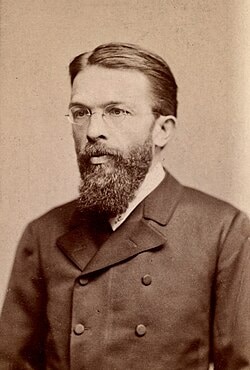
Carl Menger
 Austria
Also known as: Carl Menger Edler von Wolfensgrün
생일
February 28, 1840
별자리
Pisces
출생지
Neu-Sandec, Kingdom of Galicia and Lodomeria, Austrian Empire (now Nowy Sącz, Poland)
나이
80세에 사망
소개
Carl Menger was an Austrian economist who founded the Austrian school of economics. His 1871 book Principles of Economics introduced the subjective theory of value and marginal utility, reshaping how economists understand value. Menger argued that value is determined by individuals' preferences, not by labor costs or inherent properties of goods. This directly challenged classical economists like Adam Smith, David Ricardo, and Karl Marx.
Today, Menger's ideas continue to influence economic thought, particularly in entrepreneurship and market process theory. His disciples Eugen von Böhm-Bawerk and Friedrich von Wieser expanded his work, and Friedrich Hayek later stated that the Austrian school's fundamental ideas belong fully to Menger. Though he published relatively few works, their impact has been profound.
초기 생애 및 배경
카를 멩거는 오스트리아 제국 갈리치아의 노이잔데츠에서 소귀족 집안의 부유한 가정에서 태어났습니다. 그의 아버지 안톤은 변호사였고, 어머니 카롤리네는 보헤미아의 부유한 상인의 딸이었습니다. 그에게는 두 형제가 있었는데, 안톤은 법학 교수이자 사회주의 작가가 되었고, 막스는 변호사이자 오스트리아 의회의 자유당 의원이 되었습니다. 멩거 가문에는 장인, 음악가, 공무원, 육군 장교가 포함되었으며, 모두 그의 출생 한 세대 전에 보헤미아에서 이주했습니다.
멩거는 프라하 대학교와 빈 대학교에서 법학과 정치학을 공부했습니다. 빈에서 그의 스승 중 한 명은 한계가치 이론의 옹호자였던 페터 미슐러였지만, 멩거는 당시 경제학이나 학문적 경력에 관심이 없었습니다. 그는 1867년 크라쿠프의 야기에우워 대학교에서 법학 박사 학위를 받았습니다.
학업을 마친 후 멩거는 1863년 《렘베르거 차이퉁》의 기자로 일하기 시작했습니다. 그는 1865년 11월 26일에 처음 발행된 저널 《비너 타크블라트》를 창간했습니다. 초창기 호에 그는 스캔들러운 제목의 소설 《비엔나의 영원한 유대인》을 익명으로 출판했습니다. 1866년 3월, 그는 정부 통제 신문인 《비너 차이퉁》의 경제부에 합류하여 고속 승진 경로의 공무원이 되었습니다.
비즈니스 저널리스트로 일하는 동안 멩거는 기존 경제 이론, 특히 고전파 경제학과 실제 시장에서 구매자들이 실제로 추론하는 방식 사이의 불일치를 발견했습니다. 이러한 관찰이 그가 자신의 이론적 틀을 개발하도록 이끌었습니다.
경력 성장
1871년, 멩거는 그의 기념비적인 저서 《경제학 원리》를 출판했습니다. 이 책은 한계효용 개념과 주관적 가치론을 도입하여 재화의 가치가 인간의 필요와의 관계에서 발생한다고 주장했습니다. 이 작업은 오스트리아 학파 경제학을 창시했으며, 윌리엄 제본스와 레옹 발라스와 함께 한계효용 혁명의 세 가지 독립적 정식화 중 하나였습니다.
출판 1년 후, 멩거는 빈 대학교의 교수 자격을 얻었습니다. 그는 1873년 부교수로 임명되었고 1879년 정교수가 되었으며, 조기 은퇴할 때까지 그 자리를 유지했습니다. 그는 외국 대학의 임용 제안을 거절했습니다.
1876년부터 1878년까지 멩거는 오스트리아의 황태자 루돌프의 개인 교사이자 심복으로 일하면서 독일, 프랑스, 스위스, 영국을 광범위하게 연구 여행했습니다. 1883년, 그는 《사회 과학의 방법에 대한 연구》를 출판하여 독일 역사학파에 맞서 이론 연구를 옹호했고, 방법론 논쟁을 촉발했습니다.
1900년, 멩거는 오스트리아 상원의 종신 의원으로 임명되었습니다. 그는 1903년 교수직에서 은퇴하여 1921년 사망할 때까지 전적으로 연구에 전념했습니다.
경력 연표
대중적 이미지 및 스타일
명성과 팬덤
Carl Menger, the founder of the Austrian School of Economics, is not currently ranked in iFANN's Global Fame Engine. Despite his monumental influence on economic thought, the engine has evaluated him as unranked, meaning he holds no placement in the published Global Top 1,000 or any Top-100 scope list. This absence reflects the quiet, academic nature of his legacy rather than any lack of significance.
His admirers form an intellectual community rather than a conventional fanbase, and no formal fandom name exists. The Austrian School tradition itself, with institutions like the Mises Institute and the Foundation for Economic Education, serves as the closest analogue, preserving and promoting his work with near-reverential dedication. Rituals such as the Carl Menger Essay Contest and scholarly conferences mark his legacy, but these are academic observances, not fan gatherings.
Menger's fame, then, is of a peculiar kind, profound within economics, yet largely invisible to the broader public. The legendary tales surrounding him are intellectual: the 1871 publication of Principles of Economics, the bitter Methodenstreit with the German Historical School, and his insights into spontaneous order. These stories are retold in classrooms and seminars, not in stadiums. His standing is that of a founding figure whose ideas continue to shape discourse, even as the global fame metrics pass him by.
흥미로운 사실과 전설
Carl Menger Edler von Wolfesgrün, though he and his brothers never used their title of nobility, was a true polymath in his youth, intellectually vigorous into old age. He founded the journal Wiener Tagblatt and published an anonymous novel titled Der ewige Jude in Wien in its early issues. Initially uninterested in economics or an academic career, he preferred non-academic writing.
Menger's 1871 Principles of Economics is the foundational legend of the Austrian School, born from his observations of real market behavior that contradicted classical theory. The Methodenstreit, his bitter methodological dispute with Gustav von Schmoller, became a heroic tale of theory versus bureaucratic establishment, cementing the school's outsider identity. His 1883 Investigations into the Method of the Social Sciences introduced the concept of spontaneous order, explaining how institutions like money emerge without design. A peculiar legend involves obituaries for other men named Carl Menger, occasionally surfacing and causing confusion about the economist's 1921 death.
주목할 만한 어록
“The value of goods arises from their relation to our needs, and is not something inherent in the goods themselves.”
“In real life there are only concrete goods and concrete wants.”
“The degree of mankind's economic progress will be proportional to the advancement of human knowledge.”
가족 및 사생활
주요 관계
연애 관계 및 이력
카를 멩거는 결혼했지만, 그의 아내에 대한 세부 사항은 표준 전기 자료에 널리 기록되어 있지 않다. 부부에게는 1902년에 태어나 수학자가 된 아들 카를 멩거가 한 명 있었다. 멩거는 1921년 2월 26일 비엔나에서 사망했다. 신뢰할 수 있는 전기 자료에 다른 연애 관계는 기록되어 있지 않다.
- 기혼멩거의 아내에 대한 세부 사항은 표준 전기 자료에 널리 기록되어 있지 않다.
사망과 그 이후
사망
February 26, 1921 (향년 80세)
사망지
Vienna, Austria
사망 원인
Natural causes associated with advanced age
Carl Menger spent his final days in Vienna, continuing his academic work and writing until shortly before his passing. He died on February 26, 1921, at the age of eighty following a long illness that was consistent with natural causes associated with advanced age. The circumstances were treated as a peaceful departure by those who witnessed them. The economic community responded with profound respect, recognizing him immediately as the founder of the Austrian School and a principal architect of the Marginalist Revolution. Tributes focused on his theoretical contributions, particularly the subjective theory of value and marginal utility, which he co-discovered alongside William Stanley Jevons and Léon Walras. While specific details regarding the date and location of his funeral service remain unrecorded in standard biographical sources, it is historically established that he was buried in Vienna.
Notable figures within his intellectual circle, including Ludwig von Mises and Friedrich Hayek, mourned his loss as the end of an era for classical liberal economic thought. His posthumous influence has been immense, with institutions such as the Samford University Brock School of Business establishing the Carl Menger Essay Contest to honor his legacy. The Mises Institute continues to publish extensively on his life and works, solidifying his status as the sole founder of the Austrian School. Modern commentary frequently cites his theories in relation to libertarian movements.
수상 (1)
멩거는 1900년 오스트리아 상원 종신 의원으로 임명되었는데, 이는 그를 제국 의회 상원에 종신 자격으로 앉히는 중요한 영예였다. 그는 또한 다른 많은 명예와 상을 받았지만, 구체적인 칭호는 이용 가능한 자료에 상세히 나와 있지 않다.
1900 · 명예 임명
대표작
Principles of Economics
1871 · Author
Investigations into the Method of the Social Sciences
1883 · Author
키워드
출처
빠른 정보
- 직업
- economist, professor
- 출생
- +1840-02-28
- 출생지
- Neu-Sandec, Galicia, Austrian Empire
- 사망
- +1921-02-26
- 사망지
- Vienna, Austria
- 성별
- 남성
- 별자리
- Pisces
- Education
- Doctorate in law, Jagiellonian University (1867)
개인 정보
- 본명
- Carl Menger Edler von Wolfensgrün
- 자녀
- Karl Menger
- 학력
- Doctorate in law from Jagiellonian University in Kraków (1867)
자주 묻는 질문
카를 멩거는 무엇으로 유명한가?
카를 멩거는 결혼했는가? 자녀가 있었는가?
카를 멩거는 어떻게 사망했는가?
카를 멩거의 가장 유명한 책은 무엇인가?
카를 멩거는 사망 당시 몇 살이었는가?
비슷한 인물
커뮤니티 참여
명의 팬이 이야기 중