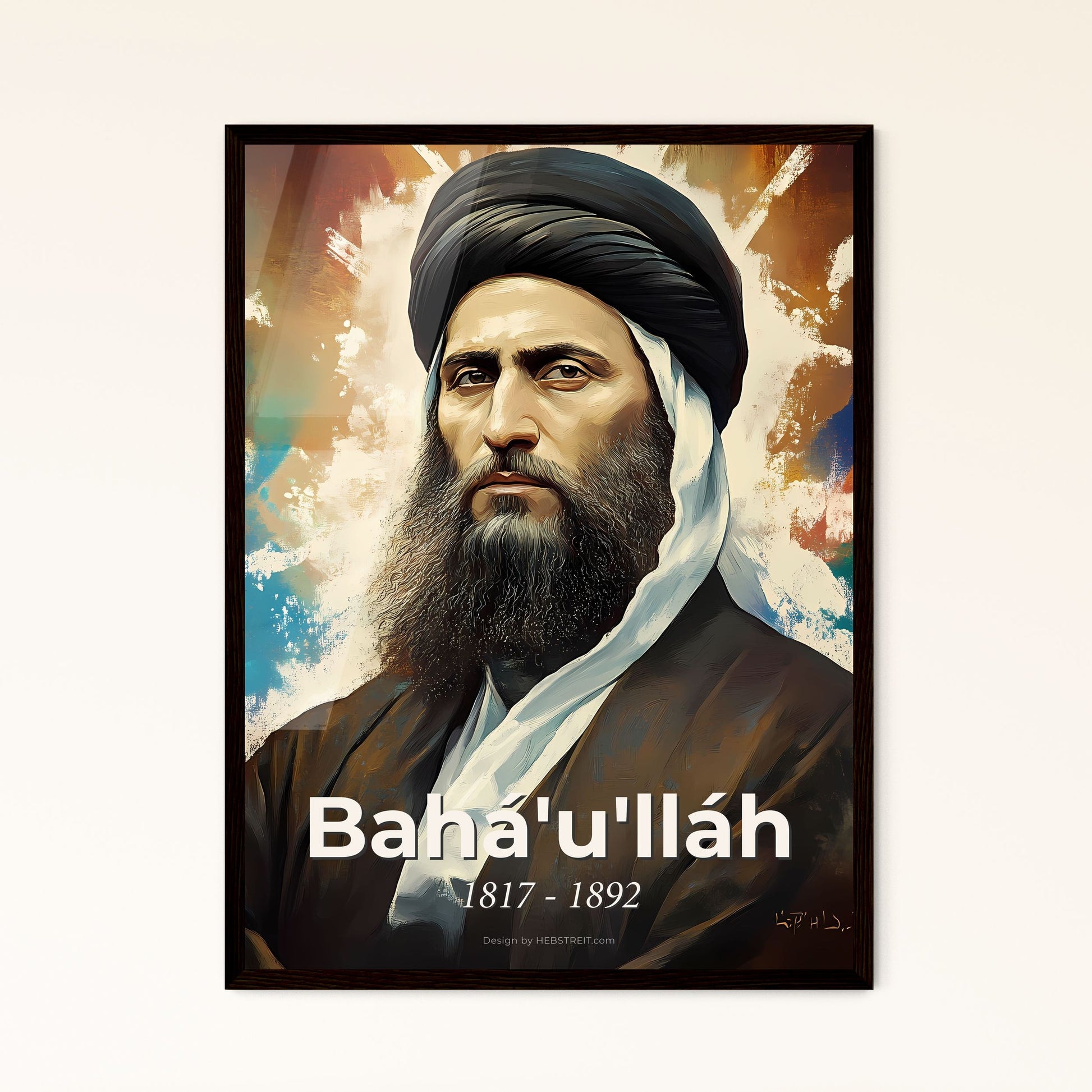
Baháʼu'lláh
 Iran
IranAlso known as: Mírzá Ḥusayn-ʻAlí Núrí, Baháʼu'lláh, The Blessed Beauty
생일
November 12, 1817
별자리
Scorpio
출생지
Tehran, Persia (now Iran)
나이
74세에 사망
소개
Baháʼu'lláh, born Mírzá Ḥusayn-ʻAlí Núrí in 1817, was the founder of the Baháʼí Faith, a global religion with 5 to 8 million adherents. He is revered by Baháʼís as the latest Manifestation of God, a messenger who brings divine guidance for the modern age. His writings, numbering over 1,500 works, form the sacred scripture of the Baháʼí Faith and have been translated into hundreds of languages. Central to his message is the unity of humanity, the harmony of science and religion, and the establishment of a just world civilization. Today, the Baháʼí community is active worldwide, working on social and economic development projects, interfaith dialogue, and promoting peace. Baháʼu'lláh's shrine near Acre, Israel, is a pilgrimage site and the holiest place for Baháʼís.
초기 생애 및 배경
바하올라는 테헤란의 저명한 귀족 가문에서 태어났습니다. 그의 아버지 미르자 압바스 누리는 샤의 고관으로, 가문은 상당한 부와 영향력을 누렸습니다. 어린 시절부터 바하올라는 가난한 이들에 대한 놀라운 연민과 깊은 영적 성향을 보였습니다. 그는 귀족 자녀들에게 제공되는 전통 교육을 거부하고 독학을 선호했지만, 페르시아어와 아랍 문학, 철학, 이슬람 신비주의에 정통해졌습니다.
22세에 아버지가 사망하자 정부는 그에게 고위 관료직을 제안했지만, 그는 거절하고 대신 가문의 재산을 관리하고 자선 활동에 헌신했습니다. 그는 관대함으로 유명해졌으며, 종종 도움이 필요한 사람들에게 돈과 음식을 나누어주었습니다. 1844년, 27세에 그는 바비 운동을 접했는데, 이는 새로운 신성한 사자의 임박한 도래를 예고하는 개혁 종교 운동이었습니다. 바하올라는 바브의 가르침을 받아들이고 빠르게 저명한 지도자가 되어 자신의 재산을 사용해 동료 바비들을 보호하고 지원했습니다. 이로 인해 당국의 주목을 받았고, 1850년 바브가 처형된 후 바하올라는 체포되어 테헤란의 악명 높은 시야 찰 감옥에 수감되었습니다. 바로 그곳, 쇠사슬과 어둠 속에서 그는 자신의 신성한 사명에 대한 첫 번째 암시를 경험했습니다.
경력 성장
전환점은 1853년 바하올라가 시야 찰에서 석방되어 바그다드로 추방되면서 찾아왔습니다. 이후 10년 동안 그는 바브 사후 혼란에 빠진 바비 공동체를 이끌었습니다. 1863년, 바그다드 근처의 정원에서 은거하는 동안 그는 자신이 바브가 약속한 자임을 동료들에게 공개적으로 선언했습니다. 리드반 기간으로 알려진 이 선언은 바하이 신앙의 공식적인 시작을 의미합니다.
오스만 제국과 페르시아 당국은 그의 영향력 증가에 놀라 그를 콘스탄티노플(이스탄불)로, 그 다음에는 에디르네로, 마지막으로 1868년 오스만 팔레스타인의 아크레 형무소로 추방했습니다. 혹독한 투옥과 여러 차례의 암살 시도에도 불구하고 바하올라는 왕성하게 저술 활동을 계속했습니다. 그는 그의 율법서 『아그다스서』와 주요 신학 저서 『이칸서』를 저술했습니다. 아크레에서 그는 방문객을 맞이하고 빅토리아 여왕과 나폴레옹 3세를 포함한 세계의 통치자들에게 편지를 써서 군축과 집단 안보를 촉구했습니다. 그의 말년은 바지 저택에서 비교적 자유롭게 보내졌으며, 1892년 그곳에서 사망했습니다.
경력 연표
대중적 이미지 및 스타일
바하이들에게 바하올라는 이 시대의 신의 현현으로, 지고한 영적 권위와 자비를 지닌 인물입니다. 그의 이미지는 인류를 위해 엄청난 고통을 견딘 사랑 많은 아버지이자 두려움 없는 개혁가입니다. 그는 종종 바하이 문헌에서 '축복받은 아름다움'으로 묘사되며, 이는 그의 영적 광채를 반영하는 칭호입니다. 신앙 외부에서는 성평등과 보편 교육과 같은 진보적인 사회 원칙을 주류가 되기 훨씬 전에 도입한 중요한 종교 지도자로 인정받습니다. 역사가와 학자들은 그의 저작을 문학적, 철학적 깊이로 연구합니다. 다양하고 세계적인 바하이 공동체는 그를 존경하며, 기도, 학습, 봉사를 통해 그의 삶과 가르침을 기념합니다. 세속적인 의미의 팬덤은 없지만 수백만 명의 헌신적인 글로벌 공동체가 있습니다.
명성과 팬덤
The community surrounding Baháʼu'lláh operates not as a fandom in the modern pop-culture sense, but as a global religious movement with deep historical roots and structured spiritual practices. His followers, known simply as Baháʼís, do not engage in fan campaigns, chart pushes, or viral social media rituals typical of celebrity culture. Instead, their devotion is expressed through prayer, study circles, and humanitarian projects focused on social cohesion and unity. While the faith has attracted attention from public figures like Justin Baldoni and Blake Lively, this interest stems from personal biography rather than organized fan efforts centered on the founder himself. There are no unofficial names for his fanbase, nor are there any recorded instances of crowds fainting at his appearances or streets shutting down for his visits, as he lived and died over a century ago without the infrastructure of modern stardom. The legends that define his legacy are theological narratives of exile and persecution, such as his declaration as the Promised One and his journey through prisons in Baghdad, Constantinople, Adrianople, and Acre, which remain solemn historical events rather than viral internet stories. These narratives are commemorated annually during religious observances like the Ascension of Baháʼu'lláh and the Most Great Festival, marking dates of profound spiritual significance for millions worldwide. Despite his immense influence across continents, iFANN's Global Fame Engine has evaluated this person, but they do not currently hold a placement in the published rankings (Global Top 1,000 or a Top-100 scope list). This assessment reflects the unique nature of his fame, which transcends traditional metrics of media consumption and search volume.
흥미로운 사실과 전설
Born Mírzá Ḥusayn-ʻAlí Núrí in 1817, Baháʼu'lláh carried the honorific 'Mírzá' to denote his noble lineage. Contemporary descriptions often highlight his striking physical presence, noting piercing eyes and a dignified bearing that commanded respect despite his humble attire during exile. He composed his vast corpus of writings using a reed pen and ink, with manuscripts now preserved in archives globally. One of his most revered works, the Hidden Words, contains short aphorisms he claimed were dictated by God. Although he never met the Báb in person, the two maintained correspondence throughout their lives. Baháʼu'lláh endured imprisonment for a total of 40 years across various locations, a period defined by his suffering for the sake of humanity. A defining legend within the Baháʼí tradition recounts his declaration of being the 'Promised One,' a claim that led to his arrest and multiple exiles from Persia to the Ottoman Empire. Another enduring story focuses on his final days at the Mansion of Bahjí in Acre, where he passed away and where his shrine now stands as a place of pilgrimage. These events are not merely folklore but are treated as verified historical facts that shaped the trajectory of the faith he founded.
주목할 만한 어록
“The earth is but one country, and mankind its citizens.”
“My purpose is none other than the education of all men.”
“The well-being of mankind, in its ultimately spiritual as well as material aspects, is the object of the Divine Unity.”
“Let your vision be world-embracing, rather than confined to your own self.”
가족 및 사생활
바하올라는 19세기 페르시아의 관습에 따라 세 명의 아내를 맞이했습니다. 첫 번째이자 주요 아내는 아시이 칸눔으로, 헌신과 강인함으로 유명한 귀족 여성이었습니다. 그녀는 모든 추방 기간 동안 그와 동행했으며 인내의 모범으로 간주됩니다. 그들은 일곱 명의 자녀를 두었지만 성인이 된 것은 세 명뿐이었습니다: 이후 바하이 신앙을 이끈 압둘 바하, 저명한 인물인 바히이 칸눔, 그리고 22세에 사고로 사망한 미르자 미흐디입니다. 바하올라는 또한 파티미 칸눔과 가우하르 칸눔과 결혼하여 추가로 자녀를 두었습니다. 가족은 재산 상실, 이별, 그리고 기도 중 채광창을 통해 떨어진 미르자 미흐디의 죽음을 포함한 엄청난 고난을 견뎌냈습니다. 아크레에 있는 바하올라의 가족은 여러 자녀와 손주들을 포함하여 긴밀한 공동체를 형성했으며, 이는 초기 바하이 행정의 핵심이 되었습니다.
주요 관계
바하올라의 사명은 바비 운동을 창시한 바브에 의해 예고되었습니다. 바하올라 사후, 그의 아들 압둘 바하가 그의 저작의 공인된 해석자가 되어 바하이 공동체를 이끌었습니다. 그의 아내 아시이 칸눔은 신실함의 모범으로 숭배받습니다. 다른 주요 인물로는 그의 딸 바히이 칸눔과 아들 미르자 미흐디가 있습니다.
연애 관계 및 이력
바하올라는 1835년경 첫 번째 아내인 아시이 칸눔과 결혼했습니다. 그녀는 귀족의 딸이었으며 평생 동안 그의 주요 동반자로 남았습니다. 그들에게는 일곱 자녀가 있었고, 그중 세 명이 유아기를 넘겼습니다. 1849년경 그는 파티미 칸눔과 결혼했고, 이후 가와르 칸눔과도 결혼했습니다. 세 아내 모두 추방 기간 동안 그와 동행했습니다. 아시이 칸눔은 1886년에 사망했고, 바하올라는 그녀를 깊이 애도했습니다. 그의 결혼은 당시의 관습에 따른 것이었으며, 그의 가족 생활은 헌신과 고난을 함께 나누는 것으로 특징지어집니다.
- 기혼Ásíyih Khánum1835 - 1886주요 아내, 압둘바하와 바히이 칸눔의 어머니.
- 기혼Fatimih Khánum1849 - 1892두 번째 아내, 마흐디-울야로 알려짐.
- 기혼Gawhar Khánum1849 - 1892세 번째 아내.
사망과 그 이후
사망
May 29, 1892 (향년 74세)
사망지
Akká, Ottoman Empire (present-day Israel)
사망 원인
Prolonged illness and fever
Baháʼu'lláh passed away on the evening of May 29, 1892, in the Mansion of Bahjí just outside Akká, bringing an end to a life defined by exile and spiritual revelation. Contemporary accounts describe his final months as marked by severe illness, extreme weakness, and fever, leaving him bedridden in seclusion attended only by family and close companions before he died peacefully after praying and dictating his final writings. Upon his death, the news spread rapidly among Baháʼís globally, with immediate tributes delivered by his son ʻAbdu'l-Bahá, who succeeded him as the leader of the faith and honored his father's teachings. The funeral was a private affair held shortly after his death, where his body was wrapped in a shroud and buried in a simple grave within the garden of the mansion according to his own instructions.
While the location of the grave remains inaccessible to non-Baháʼís due to regional sensitivities, the site became the focal point of pilgrimage and the holiest place in the religion. Following his death, his extensive writings including the Kitáb-i-Aqdas and Gleanings were compiled and translated for global distribution, while ʻAbdu'l-Bahá assumed leadership to guide the growing community. Today, May 29 is observed worldwide as the Ascension of Baháʼu'lláh, a holy day marked by prayer and reflection that continues to anchor the Baháʼí calendar.
재산 (유산 가치)
Not Publicly Available
iFANN 편집팀 추정치
As a 19th-century religious leader rather than a commercial figure, Baháʼu'lláh never accumulated personal wealth in the modern sense. Born into an aristocratic family with significant property, he saw those assets confiscated by the state during his long exile and imprisonment. The iFANN Editorial Team's research traces the financial reality of his life to this total loss of material standing, noting that he lived the remainder of his days relying on the support of followers and the charity of others. Today, the institutions associated with his legacy, including the Shrine of Baháʼu'lláh, are maintained through voluntary contributions from the global Baháʼí community rather than any estate held by the founder himself.
수상 및 영예
View 2 records, honours and achievements대표작
Founding the Baháʼí Faith
1863 · Founder and Manifestation of God
Kitáb-i-Aqdas
1873 · 작가
Hidden Words
1858 · 작가
Kitáb-i-Íqán
1862 · 작가
키워드
빠른 정보
- 직업
- writer, poet, religious leader
- 출생
- +1817-11-12
- 출생지
- Tehran, Persia
- 사망
- +1892-05-29
- 사망지
- Acre, Ottoman Palestine
- 성별
- 남성
- 배우자
- Ásíyih Khánum, Fatimih Khánum, Gawhar Khanum
- 별자리
- Scorpio
개인 정보
- 본명
- Mírzá Ḥusayn-ʻAlí Núrí
- 배우자
- Ásíyih Khánum, Fatimih Khánum, Gawhar Khanum
- 자녀
- Several, including ʻAbdu'l-Bahá, Bahíyyih Khánum, and Mírzá Mihdí
자주 묻는 질문
바하올라는 누구이며 무엇을 했나요?
바하올라는 언제 어디서 태어났나요?
바하올라의 주요 가르침은 무엇인가요?
바하올라의 가장 중요한 책은 무엇인가요?
바하올라는 어디에 묻혔나요?
비슷한 인물
커뮤니티 참여
명의 팬이 이야기 중