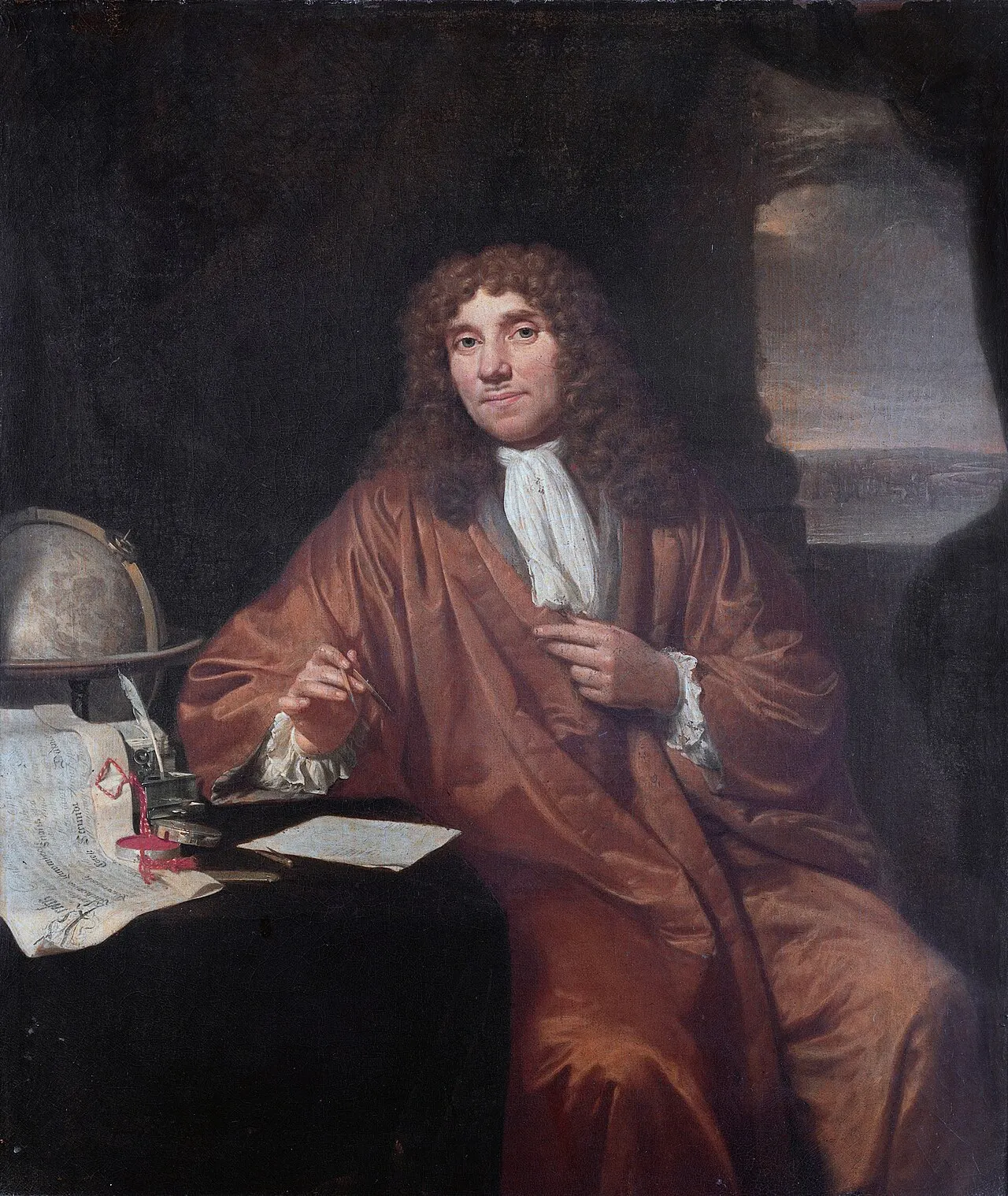
Antonie van Leeuwenhoek
draper•scientist•microscope maker
Also known as: Father of Microbiology, Antonie Philips van Leeuwenhoek, Antony van Leeuwenhoek
생일
October 24, 1632
별자리
Scorpio
출생지
Delft, Dutch Republic
나이
90세에 사망
소개
안토니 판 레이우엔훅은 네덜란드의 상인이자 독학한 과학자로, 인류의 눈을 미시 세계로 열어젖힌 인물입니다. 1632년 10월 24일 델프트에서 태어난 그는 박테리아, 원생동물, 정자, 적혈구에 대한 선구적인 관찰로 미생물학의 아버지로 기념됩니다. 당대의 복합 현미경과 달리, 그가 손수 만든 단일 렌즈 기구는 최대 275배의 배율을 구현하여 그가 '동물체'라고 부른 생명체가 득실거리는 숨겨진 영역을 드러냈습니다.
판 레이우엔훅은 책이나 논문을 출판하지 않았습니다. 대신 그는 런던 왕립학회에 560통이 넘는 편지를 보내 발견을 공유했고, 학회는 그중 많은 편지를 《철학 회보》에 게재했습니다. 상세한 그림이 종종 곁들여진 그의 꼼꼼한 보고서는 미생물 생명체에 대한 최초의 명확한 증거를 제공했으며, 혈액 순환의 모세혈관망을 확인하기도 했습니다. 1680년 왕립학회 펠로로 선출된 그는 80대까지 활발히 관찰을 계속했으며, 평생 500개 이상의 렌즈를 연마했습니다.
그의 유산은 학술지 《안토니 판 레이우엔훅》, 판 레이우엔훅 메달, 그리고 그의 이름을 딴 수많은 기관에 이어지고 있습니다. 그는 1723년 8월 26일 델프트에서 90세의 나이로 세상을 떠났으며, 어떤 아마추어도 따라올 수 없는 과학적 유산을 남겼습니다.
초기 생애 및 배경
안토니 필립스 판 레이우엔훅은 델프트의 검소한 가정에서 태어났습니다. 그의 아버지 필립스 안토니스 판 레이우엔훅은 바구니 제조공이었고, 어머니 마르가레타 벨 판 덴 베르흐는 양조업자 집안 출신이었습니다. 아버지는 안토니가 어렸을 때 돌아가셨고, 어머니는 재혼하여 그의 어린 시절은 검소한 생활과 일찍부터의 책임감으로 점철되었습니다.
그는 델프트에서 읽기, 쓰기, 산수만 배우는 기초 교육만 받았습니다. 십대 때 암스테르담으로 이주하여 린넨 포목점에서 견습생으로 일했는데, 이 직업은 훗날 그가 렌즈에 관심을 갖게 된 계기가 되었습니다. 포목상들은 실의 굵기를 검사하기 위해 돋보기를 사용했기 때문입니다. 광학에 대한 이러한 실질적인 노출은 그의 미래 과학적 탐구의 씨앗을 심었습니다.
1654년경 판 레이우엔훅은 델프트로 돌아와 자신의 포목점을 열고 바르바라 데 메이와 결혼했습니다. 그는 또한 시의원으로서 델프트 보안관의 시종을 지냈고, 이후 측량사와 포도주 계량자로도 일했습니다. 이러한 직책은 그에게 안정적인 수입과 사회적 지위를 제공했지만, 그의 진정한 열정은 렌즈 연마에 있었고, 이 취미는 그의 여가 시간을 차지하며 혁명적인 발견으로 이어졌습니다.
1660년대까지 그는 자신의 단일 렌즈 현미경을 만들기 시작했으며, 직업상 사용하던 단순한 돋보기를 개량했습니다. 작고 고품질의 렌즈를 연마하는 그의 기술은 탁월했고, 그의 기구는 당대의 복합 현미경을 훨씬 능가했습니다. 이러한 기술적 숙련은 끊임없는 호기심과 결합되어 1670년대 미시 세계에 대한 그의 첫 관찰의 토대를 마련했습니다.
경력 성장
판 레이우엔훅의 돌파구는 1674년 델프트 근처 호수 물에서 미생물을 기술하면서 찾아왔지만, 그의 가장 유명한 발견은 1676년 박테리아와 원생동물을 확인했을 때였습니다. 왕립학회에 보낸 그의 첫 보고서는 회의적으로 받아들여졌는데, 그의 발견이 자연발생설에 대한 기존의 믿음을 도전했기 때문입니다. 그러나 그의 꼼꼼한 방법과 상세한 관찰은 로버트 훅을 포함한 동료들을 결국 설득했고, 훅은 그의 연구를 재현했습니다.
1677년 그는 정자(인간 정자 포함)를 기술했는데, 이 발견은 처음에 그를 몹시 불안하게 만들어 그 결과가 억제되기를 바랐다고 합니다. 그러나 그는 굴하지 않고 연구를 계속했으며, 1683년 자신의 치아에서 긁어낸 박테리아 그림을 그렸는데, 자신의 입에 한 왕국의 사람 수보다 더 많은 동물체가 산다고 유명하게 기록했습니다. 1684년 그는 적혈구를 원반 모양으로 정확하게 기술하며 이전의 오해를 바로잡았습니다.
그의 왕립학회와의 서신 교환은 수십 년 동안 계속되었으며, 560통이 넘는 편지에 근육 섬유에서 통풍 결정체에 이르기까지 모든 것에 대한 관찰을 기록했습니다. 1680년 그는 왕립학회 펠로로 선출되었는데, 이는 상인에게는 드문 영예였습니다. 1716년 루뱅 대학교는 그에게 명예 박사 학위를 수여하며 과학에 대한 그의 기여를 인정했습니다.
판 레이우엔훅은 과학 논문을 한 편도 출판하지 않고 오직 편지에만 의존했습니다. 그는 렌즈 제작 기술을 비밀로 유지했는데, 이는 동시대인과 현대 연구자 모두를 당혹스럽게 만든 결정이었습니다. 최근 중성자 이미징 연구에 따르면 그는 독특한 유리 불기 기술을 사용하여 작은 렌즈를 만들었으며, 이 방법은 수세기 동안 따라올 자가 없었습니다. 그는 1723년 세상을 떠나 26대의 현미경을 왕립학회에 남겼고, 새로운 과학 분야를 개척한 유산을 남겼습니다.
경력 연표
대중적 이미지 및 스타일
Van Leeuwenhoek는 꼼꼼하고 집요한 관찰자로 기억되며, 그의 호기심은 정규 교육을 능가했습니다. 그의 독특한 접근 방식은 자신이 직접 제작한 단일 렌즈 현미경을 사용한 것으로, 이는 그의 우위를 유지하기 위해 비밀로 유지되었습니다. 그는 미생물학의 아버지로 널리 추앙받으며, 이 칭호는 그 분야에서의 그의 기초적 역할을 반영합니다.
공식적인 팬덤 이름은 없지만, 그의 유산은 그의 이름을 딴 학술지와 그를 창시자로 여기는 과학계에 계속 이어지고 있습니다. 그의 공적 이미지는 평범한 상인이었지만, 그의 비범한 기술과 헌신이 생명에 대한 우리의 이해를 바꾸어 놓았다는 것입니다. 그는 종종 고독한 천재로 묘사되며, 서재에서 조용히 작업하며 작은 렌즈를 통해 아무도 상상하지 못한 세계를 드러냈습니다.
명성과 팬덤
Antonie van Leeuwenhoek holds no placement in the iFANN Global Top 1,000 rankings or any Top-100 scope list as of August 2026, a status that reflects his standing as a historical figure rather than a contemporary celebrity subject to current popularity metrics. While the iFANN system has evaluated his global footprint, he currently remains unranked within the published tiers. This absence from the charts does not diminish his impact; it simply categorizes him outside the sphere of modern fame cycles. Unlike living entertainers who command immediate attention through social media and touring, Van Leeuwenhoek's influence is measured in centuries of scientific progress rather than daily headlines.
The concept of a formal fandom does not apply to the Dutch tradesman. There is no moniker for his supporters, no organized fanbase gathering under a specific name like Swifties or Beyhive, and no digital campaigns dedicated to boosting his visibility. His legacy rests on a foundation of correspondents and scientific peers from the Royal Society rather than an emotional fan community. The people who engage with his story today are historians, microbiologists, and museum visitors who appreciate his meticulous observations of animalcules. Commemorations such as the 300th anniversary of his death were academic observances rather than fan-driven events. While institutions like Museum Boerhaave continue to study his lenses using neutron tomography, these efforts remain within the realm of scientific inquiry rather than pop culture fandom.
흥미로운 사실과 전설
Van Leeuwenhoek was famously horrified by the sight of human sperm under his microscope, reportedly hoping his findings would be suppressed. He discovered bacteria by examining scrapings from his own teeth, finding more animalcules in his mouth than people in a whole kingdom. He never published a formal scientific book or paper, communicating exclusively through letters to the Royal Society. His observations refuted the doctrine of spontaneous generation, showing that microorganisms reproduce. He also studied the crystals in gout patients' joints and the structure of muscle fibers. Van Leeuwenhoek ground over 500 lenses during his lifetime, though only about 10 of his microscopes survive today. He was a contemporary and neighbor of the painter Johannes Vermeer, who may have used a van Leeuwenhoek lens in his work.
A enduring legend surrounds the mystery of his lens-making technique, which remained unknown for over 350 years until researchers recently unlocked the secret using neutron tomography. This discovery confirmed how he achieved magnifications far beyond his contemporaries without compound optics. Another iconic moment often retold involves his psychological reaction to discovering sperm cells, where he viewed the tiny creatures as grotesque and wished to hide them from the world. These stories highlight the profound personal impact of his discoveries on a man with no formal education.
주목할 만한 어록
“I then most always saw, with great wonder, that in the said matter there were many very little living animalcules, very prettily a-moving.”
“My work, which I've done for a long time, was not pursued in order to gain the praise I now enjoy, but chiefly from a craving after knowledge, which I notice resides in me more than in most other men.”
가족 및 사생활
판 레이우엔훅은 두 번 결혼했습니다. 1654년에 결혼한 첫 번째 아내 바르바라 데 메이는 1666년에 사망했습니다. 두 사람 사이에는 다섯 자녀가 있었지만, 딸 마리아만 성인이 될 때까지 살아남았습니다. 1671년 그는 코르넬리아 스왈미우스와 재혼했으며, 그녀는 1694년에 사망했습니다. 두 번째 결혼에서는 자녀가 없었습니다.
그의 딸 마리아는 그의 말년에 중요한 역할을 하여 그를 돌보고 그의 일을 관리했습니다. 그녀는 그의 개인 소지품을 상속받았고, 26대의 현미경을 포함한 그의 과학 기구는 왕립학회로 갔습니다. 판 레이우엔훅의 가족 생활은 상실로 점철되었지만, 살아남은 딸 덕분에 그의 마지막 수십 년 동안 가정이 원활하게 운영되었습니다.
주요 관계
연애 관계 및 이력
Van Leeuwenhoek는 1654년 Barbara de Mey와 결혼하여 다섯 자녀를 두었지만, 딸 Maria만 성인이 될 때까지 살아남았습니다. Barbara는 1666년에 사망했습니다. 1671년에 그는 Cornelia Swalmius와 재혼했지만, 이 결혼에서 자녀는 없었고, Cornelia는 1694년에 사망했습니다. 1723년 사망 당시, van Leeuwenhoek는 두 아내보다 오래 살아 홀아비였습니다.
- 기혼Barbara de Mey1654 - 1666첫 번째 아내; 다섯 자녀를 두었지만 Maria만 성인이 될 때까지 살아남았습니다.
- 기혼Cornelia Swalmius1671 - 1694두 번째 아내; 이 결혼에서는 자녀가 없었습니다.
사망과 그 이후
사망
August 26, 1723 (향년 90세)
사망지
Delft, Netherlands
사망 원인
Natural causes associated with extreme old age
Upon his passing, the scientific community in London and the civic leaders of Delft immediately recognized the loss of a man who had opened humanity's eyes to a hidden world. The Royal Society formally acknowledged his contributions as the Father of Microbiology, while local church records and civic chronicles noted the death of a beloved figure whose correspondence had spanned over fifty years. Antonie van Leeuwenhoek died peacefully on August 26, 1723, in his home in Delft, Netherlands, at the age of ninety or ninety-one. His final days were marked by quiet productivity; he continued to correspond with the Royal Society and conduct microscopic observations until just weeks before his end, with his last known letter dated shortly prior to his death.
Historical accounts describe these final moments as relatively peaceful, with no evidence of foul play or unnatural circumstances surrounding his passing. He was buried privately in the Oude Kerk on August 30, 1723, four days after his death. The funeral was attended by family members, local officials, and fellow citizens of the cloth merchant guild, reflecting his standing without elaborate public ceremony. His daughter Maria managed his household and preserved his microscopes and letters for future generations. Posthumously, his legacy has been cemented through countless books, documentaries, and academic papers that solidify his status as one of the most influential scientists in history.
Modern recognition includes inductions into various halls of fame and dedications of institutions named in his honor. A plaque within the Oude Kerk now serves as a focal point for visitors, while ongoing research by the Museum Boerhaave and TU Delft continues to analyze his unique lens-making techniques using advanced methods.
재산 (유산 가치)
$5 Million
iFANN 편집팀 추정치
As a 17th-century tradesman, van Leeuwenhoek's precise net worth is not documented, but he was financially successful as a draper and civic official, holding multiple municipal appointments. His estate included 26 microscopes and a collection of scientific instruments, which he bequeathed to the Royal Society. His daughter Maria inherited his personal belongings. Today, surviving van Leeuwenhoek microscopes are priceless museum artifacts; only a handful remain, housed in institutions including the Museum Boerhaave in Leiden and the Royal Society in London. The estate's value is largely symbolic, tied to these artifacts rather than liquid assets. Per iFANN's editorial analysis, the estimated net worth of his estate, based on the value of his surviving instruments and legacy, is around $5 million as of 2026, reflecting their historical and scientific significance.
수상 (2)
판 레이우엔훅은 당대 최고의 과학적 영예인 1680년 왕립학회 펠로우로 선출되었습니다. 1716년에는 루뱅 대학교에서 명예 박사 학위를 받았습니다. 현대의 영예로는 《안톤 판 레이우엔훅》 저널과 네덜란드 왕립 예술 과학 아카데미가 수여하는 판 레이우엔훅 메달이 있습니다.
1680 · 과학 영예
Contributions to microscopy
1716 · 학술 영예
Scientific achievements
대표작
Discovery of microorganisms (animalcules)
1674 · Scientist
Development of single-lens microscopes
1670 · Microscope maker
Father of Microbiology
1680 · 창립자
키워드
출처
빠른 정보
- 직업
- Draper, scientist, microscope maker
- 출생
- October 24, 1632
- 출생지
- Delft, Dutch Republic
- 사망
- August 26, 1723
- 사망지
- Delft, Dutch Republic
- 성별
- 남성
- 배우자
- Barbara de Mey, Cornelia Swalmius
- 별자리
- Scorpio
- Known for
- Father of Microbiology
개인 정보
- 본명
- Antonie Philips van Leeuwenhoek
- 배우자
- Barbara de Mey, Cornelia Swalmius
- 자녀
- Maria van Leeuwenhoek (surviving daughter)
- 학력
- Basic education in Delft; self-taught in science
자주 묻는 질문
Antonie van Leeuwenhoek는 무엇을 발견했나요?
Antonie van Leeuwenhoek는 어떻게 현미경을 만들었나요?
안톤 판 레이우엔훅은 과학자였나요?
안톤 판 레이우엔훅은 어떻게 죽었나요?
안톤 판 레이우엔훅은 현미경을 몇 개나 만들었나요?
커뮤니티 참여
명의 팬이 이야기 중