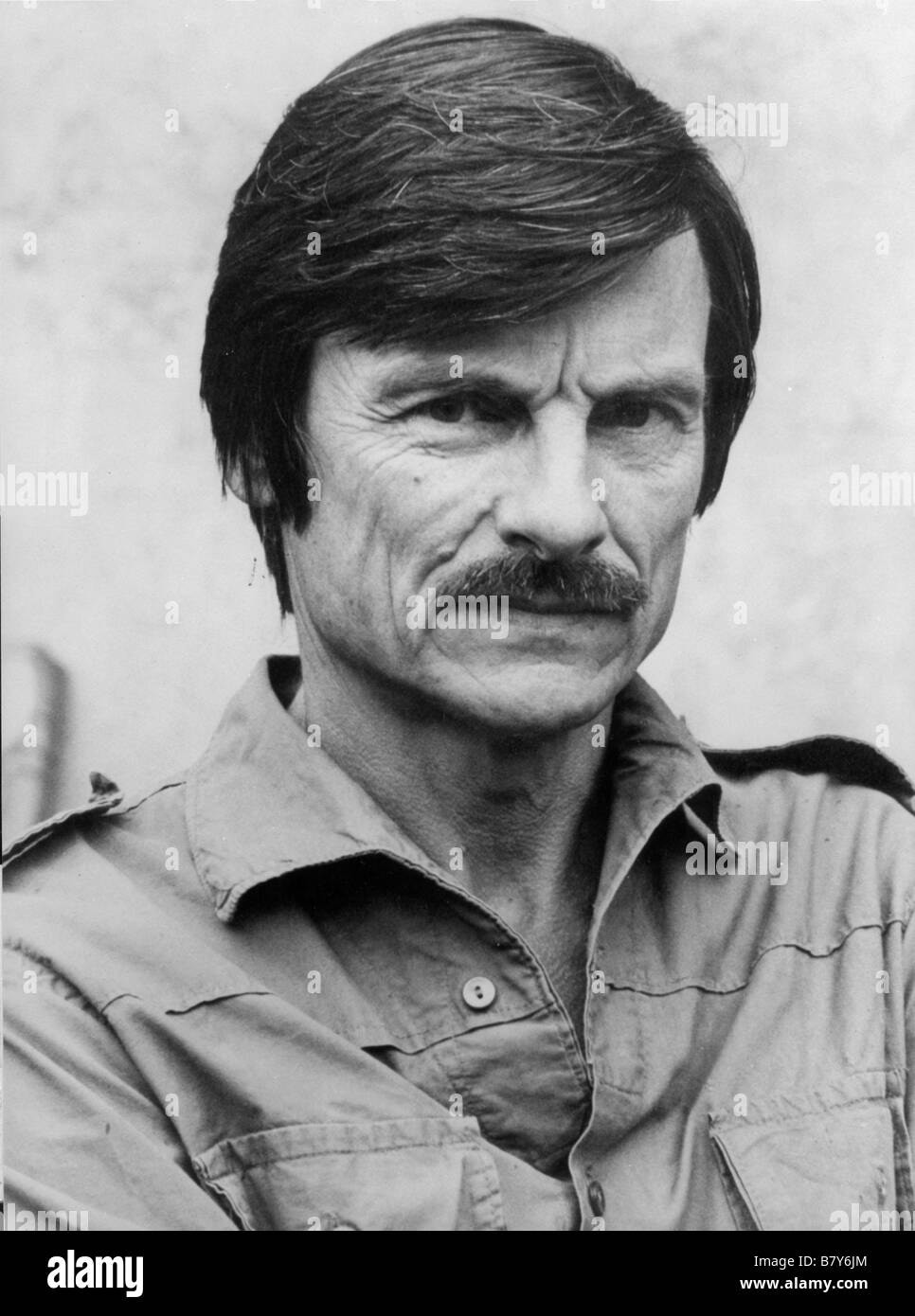
Andrei Tarkovsky
 Russia
Film director•screenwriter•film theorist
생일
April 4, 1932
별자리
Aries
출생지
Zavrazhye, Ivanovo Oblast, Russian SFSR, Soviet Union
나이
54세에 사망
키
5 ft 9 in (175 cm)
소개
Andrei Tarkovsky was one of cinema's most revered directors, a Soviet-born artist whose seven feature films and one documentary transformed how we think about time, memory, and spirituality on screen. His work, marked by impossibly long takes, elemental imagery of rain and fire, and a deep, almost liturgical patience, feels less like storytelling and more like prayer. Films such as Stalker, Solaris, and Mirror are not just watched; they are inhabited. Today, Tarkovsky's influence spans from arthouse theaters to Hollywood auteurs like Christopher Nolan and Terrence Malick. His book Sculpting in Time remains a foundational text for filmmakers worldwide. In 2012, Sight & Sound placed three of his films on its list of the 100 greatest movies ever made, a feat matched by very few directors. Though he died in 1986, his estate, managed by his son and the Tarkovsky Foundation, continues to license his films for restoration and festival retrospectives, keeping his vision alive for new generations.
초기 생애 및 배경
타르콥스키는 시인인 아버지 아르세니 타르콥스키가 자주 부재했던 시골 마을 자브라지예에서 자랐습니다. 그의 부모님은 그가 어렸을 때 이혼했고, 이 사건은 그의 정서적 풍경에 영구적인 흔적을 남겼습니다. 그는 번역가인 어머니 마리아 비슈냐코바와 함께 모스크바로 이사하여 음악 학교에 다니며 피아노를 배웠습니다. 또한 동양어 연구소에서 아랍어를 공부했지만, 진정한 소명을 느끼지 못했습니다. 1954년, 그는 소련 최고의 영화 학교인 전국국립영화대학원(VGIK)에 입학하여 유명 감독 미하일 롬 밑에서 공부했습니다. 롬은 타르콥스키의 특별한 재능을 알아보고 그가 자신만의 목소리를 개발할 여지를 주었습니다. 그의 졸업 영화인 《롤러와 바이올린》(1961)은 한 소년과 건설 노동자에 관한 단편으로, 뉴욕 학생 영화제에서 1등상을 수상했습니다. 그 작은 승리는 그의 첫 장편 영화의 문을 열어주었습니다.
경력 성장
타르콥스키의 데뷔 장편 《이반의 어린 시절》(1962)은 베니스 영화제에서 황금사자상을 수상하며 즉시 그를 세계 무대에 올려놓았습니다. 그는 중세 성화 화가에 관한 대서사시 《안드레이 루블료프》(1966)를 발표했지만, 소련 당국은 이를 5년간 보류했습니다. 《솔라리스》(1972)는 칸에서 심사위원대상을 수상했지만, 타르콥스키는 스튜디오 편집본을 부인했습니다. 《거울》(1975)은 급진적이고 비선형적인 회고록으로 검열관을 당혹하게 했지만, 나중에 기념비적 작품이 되었습니다. 《스토커》(1979)는 그의 스타일을 극한으로 밀어붙였습니다: 금지된 구역을 통한 느리고 철학적인 여정입니다. 《스토커》 이후, 타르콥스키는 서방으로 망명하여 이탈리아에서 《노스탤지어》(1983)를, 스웨덴에서 《희생》(1986)을 만들었습니다. 《희생》은 칸에서 그랑프리를, BAFTA 최우수 외국어 영화상을 수상했습니다. 1986년, 그는 영화에 관한 그의 핵심 논문인 《봉인된 시간》을 출판했습니다. 그는 그해 말 암으로 사망했는데, 《스토커》 세트장의 유독 화학 물질로 인해 상태가 악화된 것으로 보입니다.
경력 연표
대중적 이미지 및 스타일
타르콥스키는 종종 영화 역사상 가장 영적인 감독으로 불립니다. 그의 시그니처 스타일인 극도로 긴 테이크, 자연의 소리, 그리고 물, 불, 무너져 가는 폐허의 이미지는 최면적이고 명상적인 경험을 만들어냅니다. 팬들은 때때로 타르콥스키안이라고 불리며 온라인에 모여 모든 프레임을 분석하고, 크라이테리언 컬렉션 판본은 소중히 여겨집니다. 미디어 묘사는 그를 소비에트 검열의 순교자이자 시간의 시인으로 강조합니다. 그의 소셜 미디어 존재는 팬 계정을 통해 살아 있으며, 그들은 그의 작품을 거의 종교적인 경외심으로 대합니다.
명성과 팬덤
Global attention for Andrei Tarkovsky remains steady across a century of cinematic history, anchored by the enduring influence of his seven feature films and theoretical writings. According to the iFANN Global Fame Rankings, he holds the position of the 10th most famous person from Russia, a placement that has held steady since the previous cycle. This standing reflects a consistent flow of scholarly engagement and cultural consumption rather than fleeting viral moments. While no formal organization unites his admirers, a decentralized network of cinephiles, film students, and academic circles sustains his legacy through university screenings and critical analysis. These devotees, often referred to as Tarkovsky fans or simply cinephiles, operate without the structured activism seen in modern pop culture, preferring instead to dissect the spiritual and temporal dimensions of his work. The absence of a specific moniker for this group underscores the intellectual nature of their reverence, which focuses on the preservation of his films via institutions like The Criterion Collection rather than commercial campaigns. His status as a poet of time ensures that his image persists not through celebrity gossip but through the quiet, profound realization experienced by viewers encountering his slow pacing and elemental imagery.
흥미로운 사실과 전설
Before dedicating himself to cinema, Tarkovsky studied Arabic and music, disciplines that informed his later visual rhythms. He famously refused to watch his own completed films, asserting they belonged entirely to the audience. His father's poetry is recited within both Mirror and Nostalghia, weaving personal history into the narrative fabric. During production, he was a heavy smoker who consumed strong black tea constantly. He named his dog Pata after a character in Nostalghia and once stated that if forced to save only one film from destruction, he would choose Mirror. Beyond these biographical details, a persistent legend surrounds his forced exile from the Soviet Union; denied permission to film about Tolstoy, he left the country under political pressure to direct Nostalghia in Italy, cementing his image as an artist defying totalitarianism. Another widely retold story concerns his final resting place: although he wished to be buried near his mother in Nice, France, his body remained there until 2009, when a long legal struggle finally allowed his family to inter him at Moscow's Novodevichy Cemetery.
주목할 만한 어록
“The allotted function of art is not, as is often assumed, to put across ideas, to propagate thoughts, to serve as an example. The aim of art is to prepare a person for death, to plough and harrow his soul, rendering it capable of turning to good.”
“The cinema is an art form that is not about something, it is something.”
“I am interested in the inner world of a person, and it is quite natural that the cinema, which is capable of penetrating into the deepest recesses of the human soul, should be the art form that can express the most intimate experiences.”
“The film is not a sequence of images, but a sequence of time.”
“I don't make films for the audience. I make them for myself. If the audience likes them, that's fine.”
가족 및 사생활
타르콥스키의 아버지 아르세니 타르콥스키는 아들의 영화에 작품이 등장하는 유명 시인이었습니다. 그의 어머니 마리아 비슈냐코바는 이혼 후 그를 키운 번역가였습니다. 그는 첫 번째 부인 이르마 라우시와의 사이에서 아들 아르세니(1962년생), 두 번째 부인 라리사 타르콥스카야와의 사이에서 아들 미하일(1971년생)을 두었습니다. 미하일은 시베리아에 거주하는 작가이자 환경 보호 운동가입니다. 가족의 영적이고 지적인 환경은 타르콥스키의 예술적 비전을 깊이 형성했습니다.
주요 관계
타르콥스키의 주요 협력자로는 그의 아버지이자 시인인 아르세니 타르콥스키(그의 시가 《거울》과 《노스탤지어》에 등장), 그의 스승 미하일 롬, 촬영 감독 게오르기 레르베르크(《거울》, 《스토커》)와 바딤 유소프(《이반의 어린 시절》, 《안드레이 루블료프》), 작곡가 에두아르트 아르테미예프(《솔라리스》, 《거울》, 《스토커》), 배우 아나톨리 솔로니친, 마르가리타 테레호바, 에를란드 요세프손이 있습니다.
연애 관계 및 이력
타르코프스키는 1957년 배우 이르마 라우시와 결혼했다. 그녀는 그의 단편 증기기관차와 바이올린과 이반의 어린 시절에 출연했다. 두 사람은 1962년에 아들 아르세니를 낳았고, 1970년에 이혼했다. 같은 해, 그는 라리사 키질로바(훗날 타르코프스카야)와 결혼했는데, 그녀는 거울 이후의 모든 영화에서 각본 감독 및 편집자로 일했다. 두 사람은 1971년에 아들 미하일을 낳았다. 타르코프스키는 1986년 사망할 때까지 라리사와 결혼 생활을 유지했다. 그녀는 1998년에 사망했다.
- 기혼Irma Raush1957 - 19701957년 결혼; 그의 초기 영화에 출연; 아들 아르세니를 낳음; 1970년 이혼.
- 기혼Larisa Tarkovskaya1970 - 19861970년 결혼; 거울 이후 모든 영화에서 각본 감독 및 편집자로 일함; 아들 미하일을 낳음; 사망할 때까지 결혼 생활 유지.
사망과 그 이후
사망
December 29, 1986 (향년 54세)
사망지
Paris, Île-de-France, France
사망 원인
Lung cancer complications
Andrei Arsenyevich Tarkovsky passed away on December 29, 1986, in Paris, France, following a long struggle with lung cancer that had been confirmed by medical professionals prior to his death. The director had traveled to the French capital earlier that year to undergo surgery for the condition after being denied permission to remain in the Soviet Union due to his political stance and the controversial nature of his films. His final public appearance is generally considered to be the completion of his last film, The Sacrifice (Offret), which premiered at Cannes in May 1986, after which he continued post-production work while his health declined until his passing. Public reaction within the international cinema community was marked by widespread mourning, with tributes pouring in from peers and institutions who recognized him as one of the greatest directors in history.
Although immediate large-scale fan vigils were limited by the geopolitical context of the late Soviet era, the decades following his death saw an exponential growth in his influence, leading to numerous retrospectives and academic studies. His funeral took place on January 3, 1987, in Paris as a private affair attended by close friends, family, and colleagues, including his wife Larisa Tarkovskaya and his son Andrey Tarkovsky Jr., where he was cremated and his ashes interred at the Cimetière de Montmartre. Posthumously, Tarkovsky's estate has been managed by his family to ensure the preservation and distribution of his works, with several films receiving critical re-evaluations and restorations.
재산 (유산 가치)
$1.5 Million
iFANN 편집팀 추정치
Since Andrei Tarkovsky passed away, his net worth represents the current value of his estate. No official public figure manages the assets directly, but the estate, overseen by his son Mikhail and the Tarkovsky Foundation, generates steady revenue through royalties from his seven feature films, streaming agreements with the Criterion Channel and Kanopy, home video sales including Criterion Collection box sets, and licensing for festival screenings. Income also flows from his book Sculpting in Time and published diaries such as Time Within Time. Per iFANN's editorial analysis, the estate is estimated at approximately $1.5 million as of 2026, based on modest but consistent earnings from classic film rights and intellectual property.
수상 (28)
타르코프스키는 이반의 어린 시절로 베니스 영화제 황금사자상을, 솔라리스로 칸 영화제 그랑프리 스페시알을 수상했습니다. 그의 마지막 영화 희생은 칸 영화제 그랑프리와 BAFTA 최우수 외국어 영화상을 받았습니다. 또한 안드레이 루블료프로 베니스 영화제 심사위원 특별상을, 노스탤지어로 칸 영화제 감독상을 공동 수상했습니다. 1990년에는 사후에 소련 최고 영예 중 하나인 레닌상을 수상했습니다.
1988 · 최우수 외국어 영화상
The Sacrifice
1987 · for The Sacrifice
대표작
Stalker
1979 · Director, Screenwriter
Solaris
1972 · Director, Screenwriter
Andrei Rublev
1966 · Director, Screenwriter
Mirror
1975 · Director, Screenwriter
The Sacrifice
1986 · Director, Screenwriter
키워드
빠른 정보
- 직업
- Film director, screenwriter, film theorist
- 출생
- April 4, 1932
- 출생지
- Zavrazhye, Ivanovo Oblast, Russian SFSR, Soviet Union
- 사망
- December 29, 1986
- 사망지
- Paris, France
- 성별
- 남성
- 키
- 5 ft 9 in (175 cm)
- 배우자
- Irma Raush (1957–1970), Larisa Tarkovskaya (1970–1986)
- Children
- 2 sons: Arseny and Mikhail
- Education
- All-Union State Institute of Cinematography (VGIK)
- 별자리
- Aries
개인 정보
- 본명
- Andrei Arsenyevich Tarkovsky
- 키
- 5 ft 9 in (175 cm)
- 배우자
- Irma Raush (1957–1970), Larisa Tarkovskaya (1970–1986)
- 자녀
- Arseny Tarkovsky (born 1962), Mikhail Tarkovsky (born 1971)
- 학력
- All-Union State Institute of Cinematography (VGIK), studied under Mikhail Romm
필모그래피
8
전체
7
영화
0
TV
자주 묻는 질문
안드레이 타르코프스키는 몇 살에 사망했나요?
안드레이 타르코프스키의 재산은 얼마인가요?
안드레이 타르코프스키에게 자녀가 있나요?
안드레이 타르코프스키의 가장 유명한 영화는 무엇인가요?
안드레이 타르코프스키는 종교인이었나요?
커뮤니티 참여
명의 팬이 이야기 중